





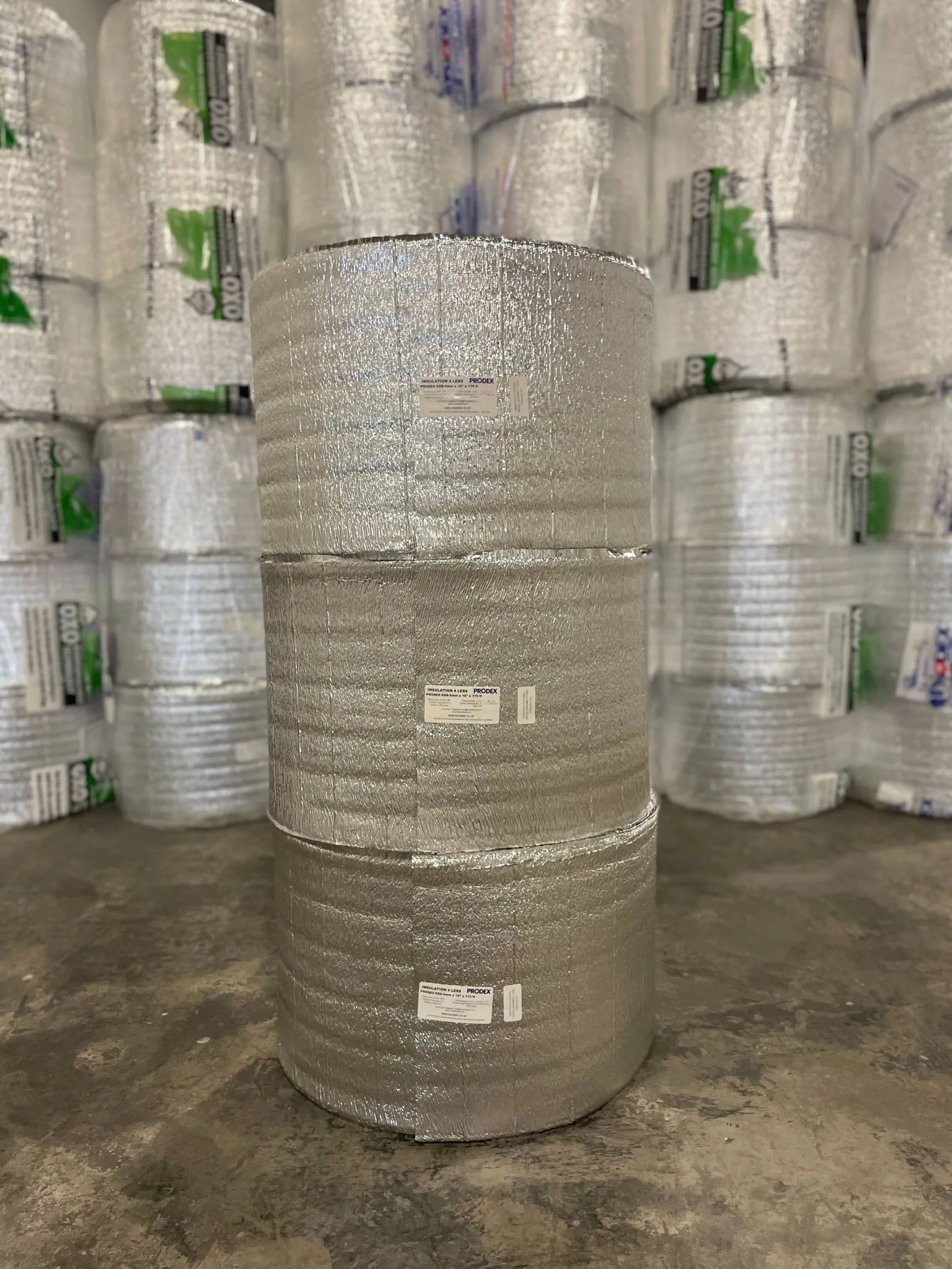
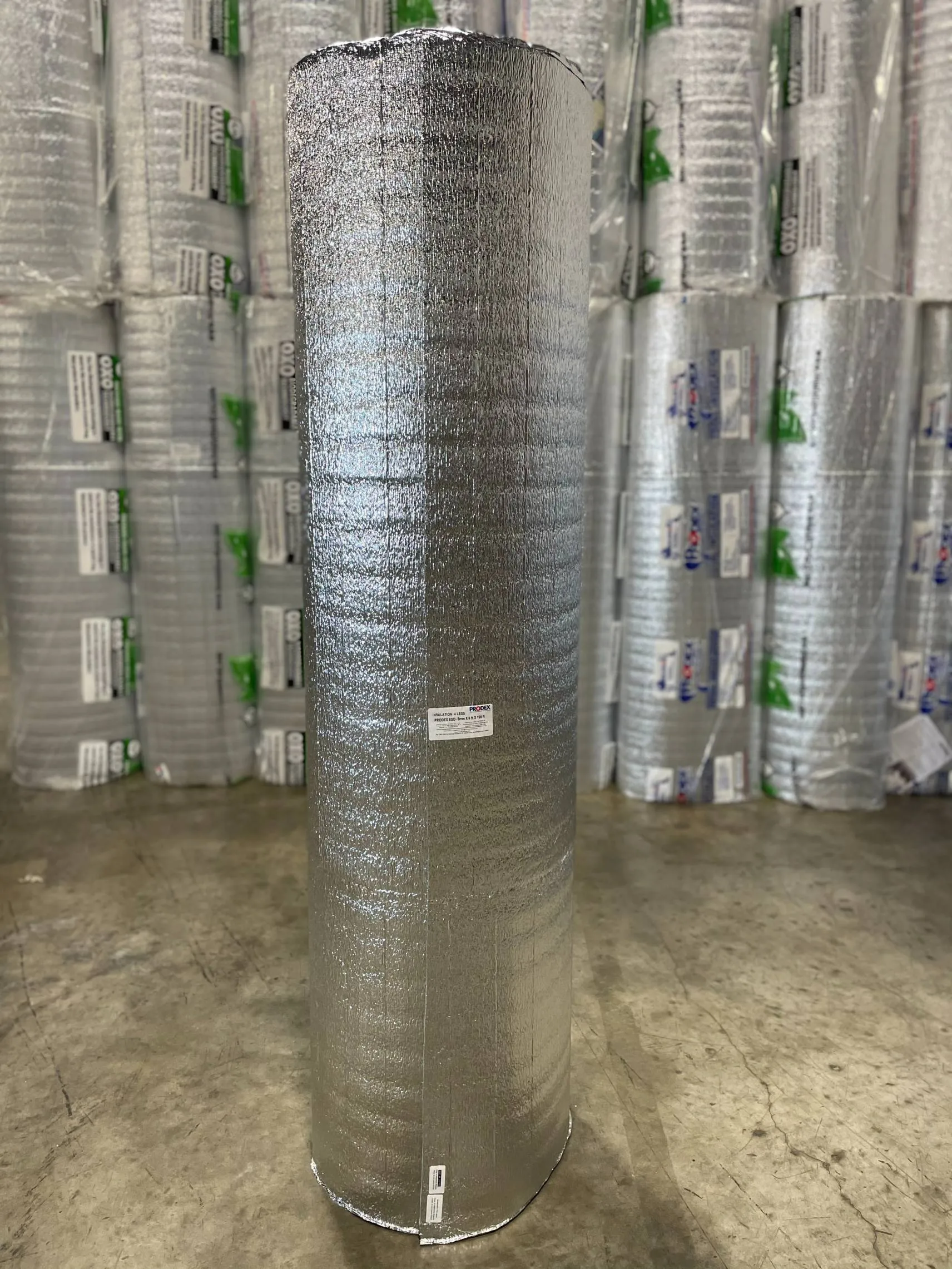
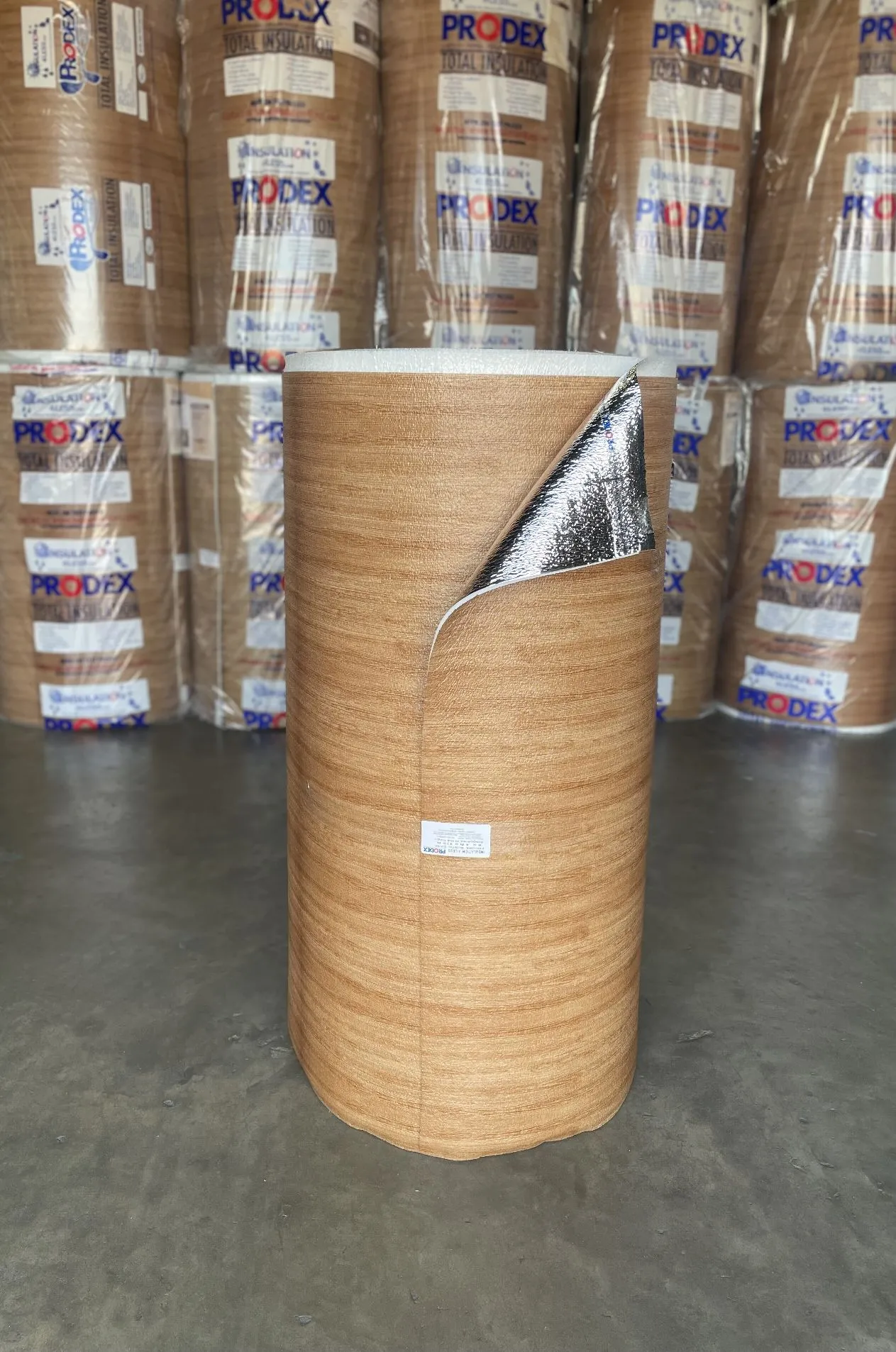
10M Prodex Total Plus 4 ft x 85.3 ft (341 sq ft)
🚚 Reduced Ship Price Starts at 2 rolls
Reduced Roll Price at 5, 10, 20, 50, 100 and 200 rolls
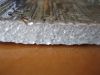
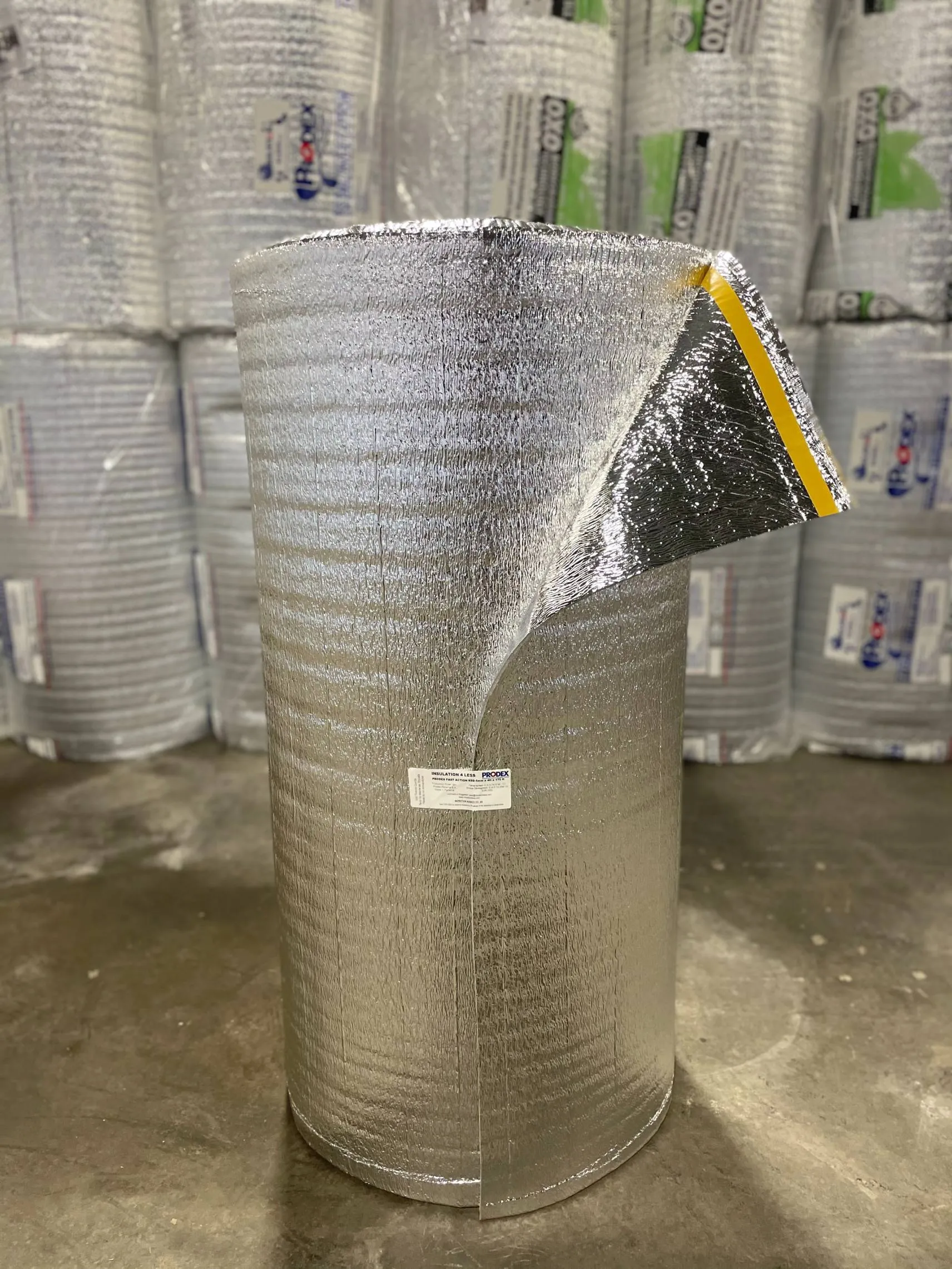
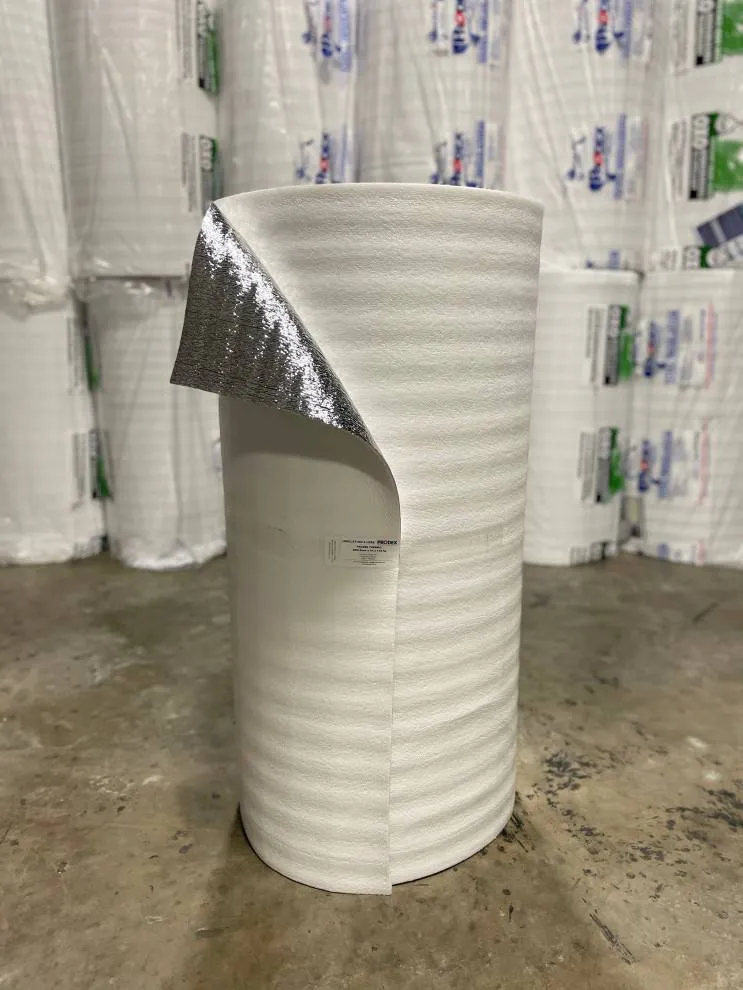
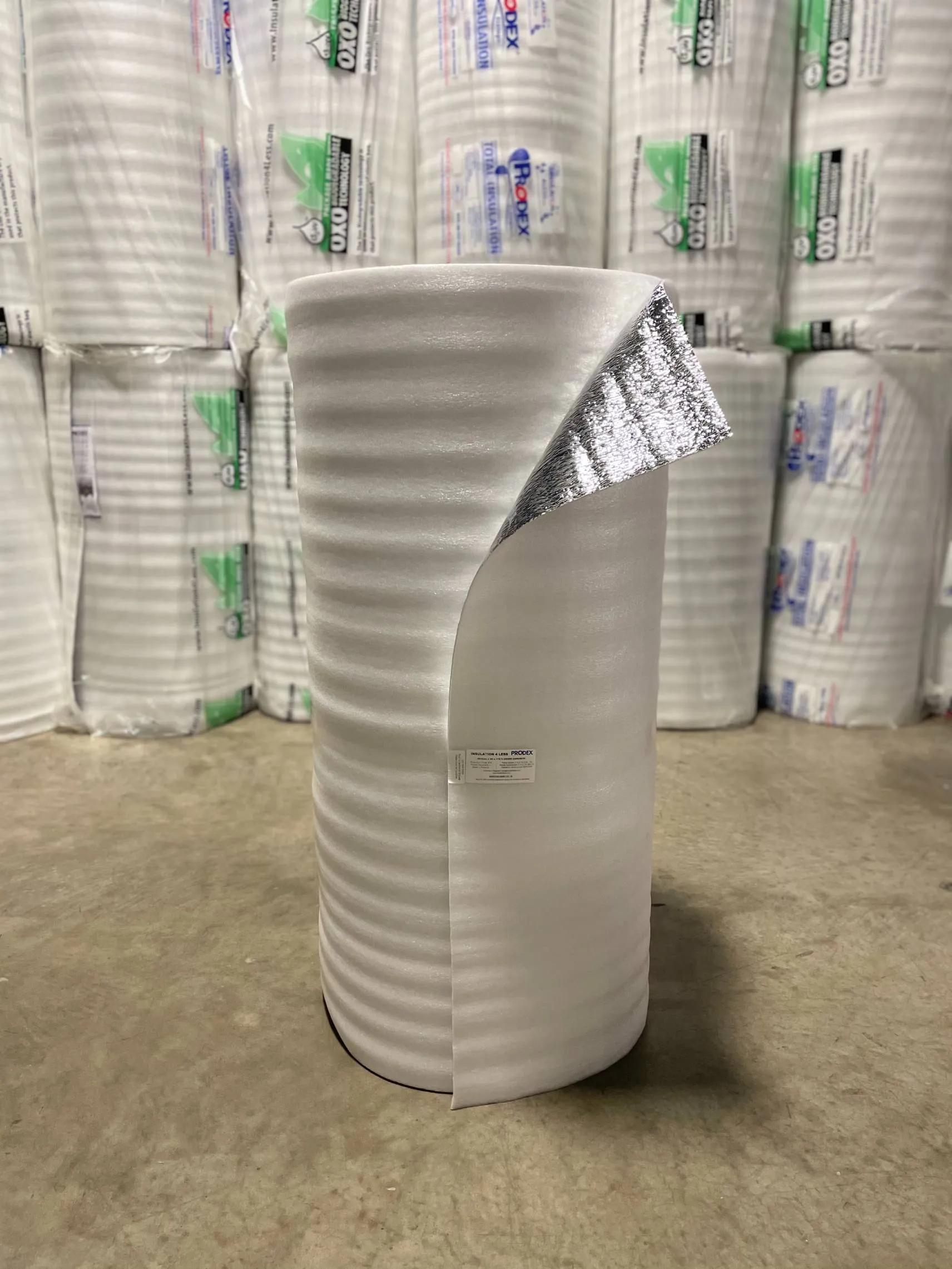
10M - Twice as thick as 5M rolls R22 - Technical Brochure Heat-seal edge for tighter seal and enhanced condensation prevention - No need for seam tape. Installation Video. Reflective reinforced foil on each side of 10mm (0.4 inch) closed-cell polyethylene foam center with heat-seal edge.
Why Choose 10M Prodex Total Plus?
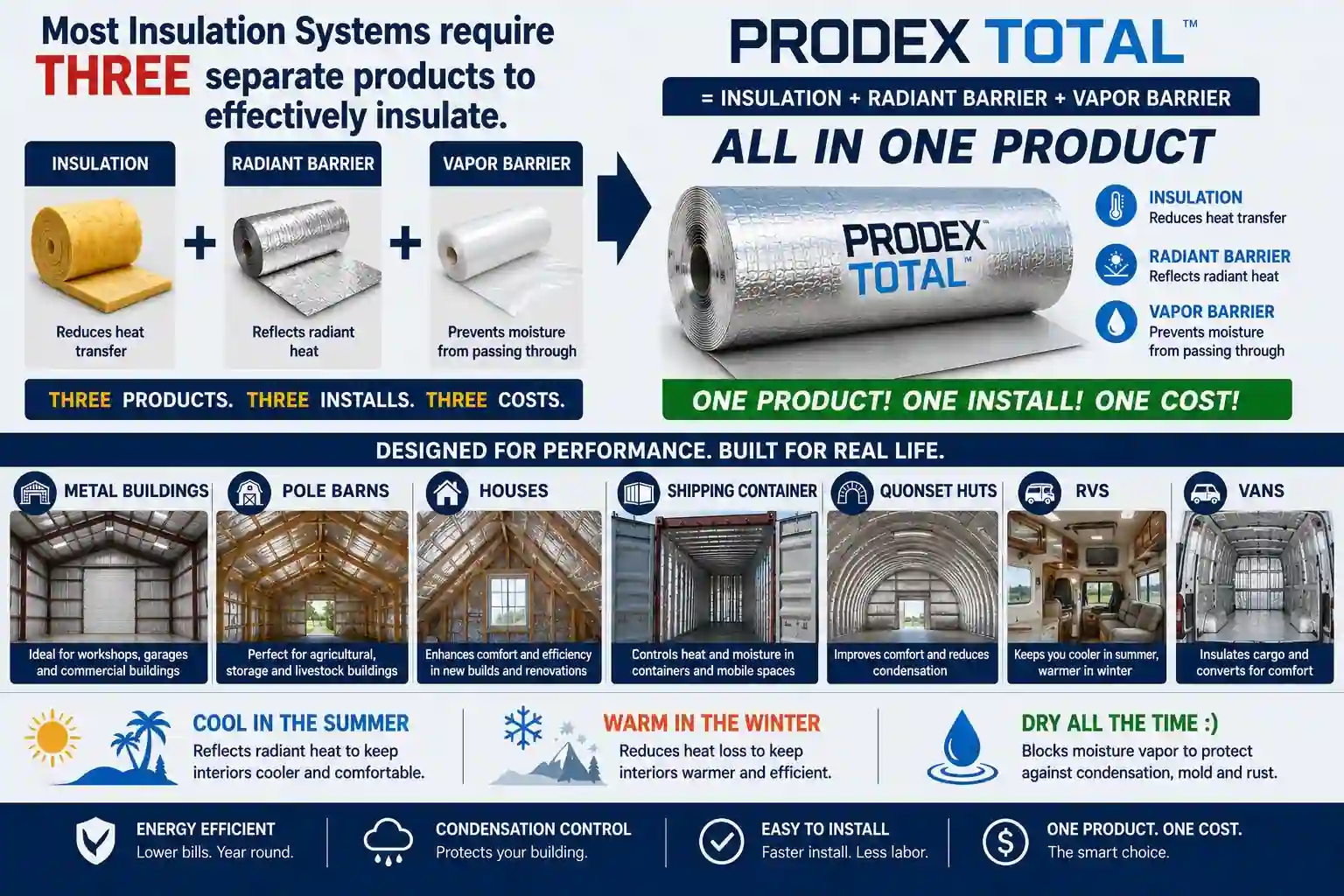
Most Insulation Systems require THREE separate products to effectively insulate.
Prodex Total combines ALL THREE in ONE. Insulation + radiant barrier + vapor barrier = Prodex Total.
One Product! One Cost! One Install!
Cool in the Summer. Warm in the Winter. Dry All the Time :)
- Higher R Value - 22 - Unaffected by humidity. Keeps your space comfortable year-round with improved thermal resistance that lowers energy
- Built Tough - Enhanced longitudinal strength and superior tear resistance makes installation easier and extends product life.
- Condensation Control - Integrated vapor barrier reduces condensation, protecting your structure from moisture, mold and mildew.
- Seamless Installation - New thermal weld system delivers:
- No seam tape required = Cost Saving
- Invisible seams = clean, professional finish
- Extra Condensation protection - Tight seal creates interior envelope keeping sheeting temperatures consistent on both sides.
- Our Most Popular Product - Represents 40% of the rolls sold on this website.
Resources
▶ Watch Installation Video
📄 Download Technical Brochure
Heat-seal edge for tighter seal and enhanced condensation prevention
Insulation Layers |
|---|
Reflective reinforced foil |
Polyethylene backing |
Closed-cell polyethylene foam |
Polyethylene backing |
Reflective reinforced foil |
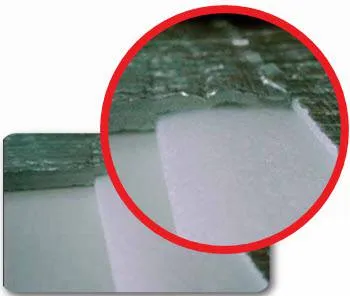
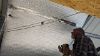
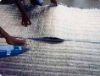
10M Prodex Total Insulation Plus material has cuts at the edge to overlap the rolls. Use a hot air gun to melt the polyethylene foam at both rolls. Add a little hand pressure and you have a complete welding process. This Thermal welding allows 10M to have a totally impermeable overlapping and mechanical seal between installed rolls.
Prodex Total Difference: R-value unaffected by humidity : Prevents condensation : Prevents 97% of radiant heat transfer : Vapor barrier : Superior heat weld for seams : Elastic : Does not promote mold or mildew : Does not provide for nesting of rodents, bugs or birds : Seals around nails (no leak) : Reflective reinforced foil on each side of 10mm (0.4 inch) closed-cell polyethylene foam center : Keeps its shape over time (doesn't collapse) : Rippled surface increases airflow : Green Product Certified : Over 5 billion square feet sold worldwide.
Insulation Solutions for Every Type of Building
Whether you're insulating a home, metal building, or pole barn, choosing the right insulation system is essential for controlling heat, cold, moisture, and condensation. Explore our in-depth guides to house insulation, metal building insulation, and pole barn insulation to learn why thousands of builders and homeowners choose Prodex Total.
Understand What You're Buying
Reflective Insulation: Benefits, Performance & Installation
Beware of Imitations - Official U.S. & Canadian Distribution Center of Prodex Total Insulation
Credibility
Prodex adds an extra layer of credibly by submitting insulation rolls to the ASTM Rima International verification program. By having a third party verification, Prodex assures its clients that the insulation complies with industry standards, and is suitable for any construction system.
10M Prodex Total Insulation4Less Reviews
Smart Customer - Smart customer is the leading destination for customer reviews of businesses. We display the Smart Customer page link because this review site requires the reviews to be submitted by customers.
Better Business Bureau (BBB) For over 100 years, BBB has set the standard for ethical business behavior. We're proud to maintain an "A to A+" rating. We've been Accredited since 2004.
Insulation4Less Reviews Featuring Prodex Total Insulation Learn why our reviews are so good.
Video Review of Prodex Total Insulation
Protect Your R-value
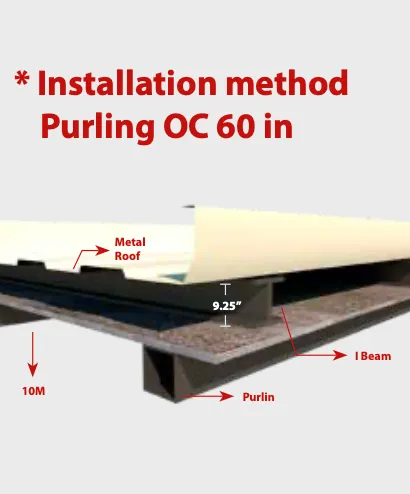
Prodex Total can be used as standalone or complement to fiberglass metal building insulation
R-value Protection
Fiberglass insulation's R-value comes from the air pockets between the fibers, not the fibers themselves. When moisture fills these air pockets, the R-value decreases.
How Prodex Total Helps
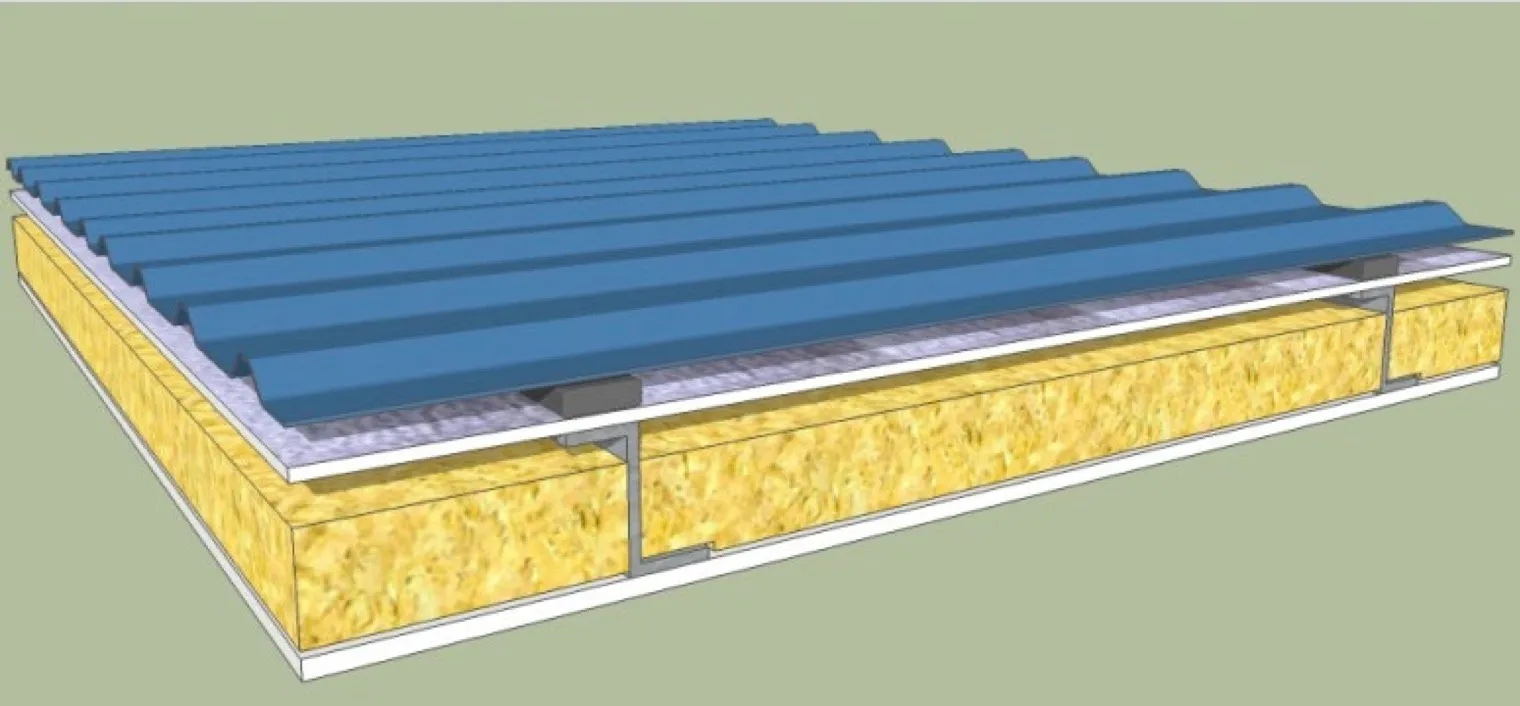
Installing Prodex Total (insulation + radiant barrier + vapor barrier + air barrier + condensation eliminator) between the fiberglass and metal sheeting helps keep the fiberglass dry, preserving the fiberglass R-value over time. Prodex Total vs. Fiberglass Insulation for Metal Buildings
Looking at different insulation options for your project? Discover how Prodex Total Insulation compares to Spray Foam insulation in Metal Buildings.
If the application requires code approval, provide the technical sheet to your code official prior to ordering.
10M Prodex TotalTechnical Data |
| R-value 22 (One layer, heat flow down) |
|
| Characteristics | Value | Regulation |
| Nominal Thickness | 0.40" | 10 mm | |
| Flame Spread Index | 0 | ASTM E 84-10 |
| Smoke Developed Index | 5 | ASTM E 84-10 |
| Fungi Resistance | No growth | ASTM C 1338 |
| Tensile Strength at Break (MD) | 17.27 Lbf/inch | ASTM D-638 |
| Water Vapor Permeance | 0.011 Perms (Impermeable) | ASTM E 96-05 |
| Temperature and Humidity Resistance: No corrosion, no delamination, no loss of metalization - ASTM C-1258-08 | ||
Cell Structure - Closed Approval questions should be posed to your local code official. Questions? | ||
10M Applications (uses)
10M Prodex Total insulation is a high-performance reflective insulation solution suitable for a wide variety of residential, commercial, and agricultural uses. Its unique composition of reflective foil, polyethylene foam, and vapor barrier properties make it an ideal choice for combating heat, cold, moisture, and radiant energy. Here are the most common applications:
🏗️ Heat & Condensation Protection for Metal Buildings
Prodex Total helps reduce radiant heat gain and control condensation in metal buildings, protecting against moisture-related damage and improving overall building performance. Learn more in our Metal Building Heat and Condensation Guide.
🚜 Pole Barn
Excellent for barns, riding arenas, equipment sheds, and agricultural storage buildings. Prodex Total provides advanced insulation for pole barns that helps reduce condensation, improve comfort, and lower heating and cooling costs.
🏠 House
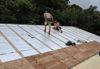
Ideal for roofs, ceilings, attics, crawl spaces, basements, and garages.
House Insulation enhances energy efficiency by reflecting radiant heat, creating a vapor barrier, and maintaining year-round comfort — perfect for DIY homeowners.
🏠 Roof Insulation
Reduce heating and cooling costs with the right roof insulation system. Compare insulation materials, installation techniques, and solutions for homes, metal roofs, garages, and commercial buildings.
🚢 Shipping Container Insulation
The right shipping container insulation helps transform steel containers into comfortable homes, offices, workshops, and storage buildings while reducing condensation and energy loss.
🏗️ Metal Garage & Workshop Insulation
See why insulation for metal garages helps keep your garage cooler during summer, warmer during winter, and dry all year while protecting vehicles and equipment.
More Applications for Prodex Total Insulation (alphabetical order)
Cold Storage Buildings – Maintain consistent temperature control and reduce energy use with a high-performance vapor barrier.
Dairy Barns, Poultry Houses, and Hog Barns - Control humidity, reduce order buildup, and maintain consistent temperatures for healthier livestock and lower operating costs.
Dog Kennels and Animal Shelters – Create a safer, more comfortable environment for pets and livestock by controlling heat and humidity
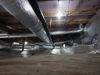
Ductwork Wrap – Improve HVAC efficiency and eliminate sweating by insulating ducts with reflective vapor-barrier protection.
Garage Door Insulation – Reduce heat transfer and noise while increasing your garage’s R-value and comfort year-round.
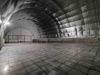
Quonset Hut Insulation – Stop condensation and stabilize interior temperatures in arched steel buildings and storage huts with flexible reflective insulation.
RV and Camper Insulation – Keep your vehicle cooler in summer and warmer in winter with reflective, lightweight insulation that resists moisture.
Tiny House Insulation – Explore the best insulation for tiny homes -- compare fiberglass, spray foam and Prodex Total to find the ideal balance of comfort, moisture control, and efficiency.
10M Additional Benefits
Prodex Total Difference: R-value unaffected by humidity : Prevents condensation : Prevents 97% of radiant heat transfer : Vapor barrier : Core sealed on both sides with flange : Elastic : Does not promote mold or mildew : Does not provide for nesting of rodents, bugs or birds : Seals around nails (no leak) : Reflective reinforced foil on each side of 10mm (0.4 inch) closed-cell polyethylene foam center : Keeps its shape over time (doesn't collapse) : Rippled surface increases airflow : Over 5 billion square feet sold worldwide. Inhibits the development of fungi such as Aspergillus niger, Aspergillus avus, Aspergillus versicolor, Penicillium funiculosum, and Chaetomium globosum as per ASTM C standards.
Resistance to Growth of Fungi
Inhibits the development of fungi such as Aspergillus niger, Aspergillus avus, Aspergillus versicolor, Penicillium funiculosum, and Chaetomium globosum as per ASTM C standards.
Additional Performance Advantages
Reflective and Thermal Protection
Reinforced reflective foil reflects up to 97% of radiant heat.
Provides consistent thermal insulation across all seasons.
Moisture and Vapor Control
Hydrophobic core resists moisture absorption.
Prevents condensation from forming on surfaces.
Durability and Integrity
Does not leak or lose integrity when nailed or stapled.
Maintains thickness and performance over time without compression.
Health, Safety, and Comfort
Acts as a barrier to insects and pests.
Class A1 fire rating for superior fire resistance.
Resistant to mildew, rot, and corrosion.
Ease of Use and Sustainability
Lightweight and easy to handle during installation.
Energy-efficient solution that reduces heating and cooling costs.
Environmentally friendly and free of harmful chemicals.
Slash Your Heating & Cooling Costs With Prodex Total Insulation
Turn High Energy Prices Into Everyday Savings
Electricity costs keep climbing, but your bills don’t have to. Prodex Total Insulation creates a powerful thermal and radiant barrier that keeps summer heat out and winter warmth in. Your HVAC system runs less, uses less power, and lasts longer—while you stay comfortable year-round.
Stop Wasting Money Through Your Walls and Roof
Every under-insulated wall, roof, and door is a leak in your budget. Prodex Total reflects radiant heat, reduces heat transfer, and helps seal air gaps. Instead of paying to heat and cool the outdoors, you keep your conditioned air where it belongs—inside.
Real Performance, Real Return on Investment
Prodex Total Insulation doesn’t just enhance comfort—it pays you back. By cutting heat gain in summer and heat loss in winter, many customers see a measurable drop in heating and cooling costs soon after installation. Over time, those savings often exceed the cost of the insulation itself.
Comfort You Can Feel, Savings You Can Measure
With Prodex Total, you’ll enjoy fewer hot and cold spots, more stable indoor temperatures, and a quieter, more comfortable space. Meanwhile, your energy usage tells the story: fewer HVAC cycles, less strain on equipment, and lower monthly bills.
Built for Metal Buildings, Pole Barns, Shops, and Homes
Prodex Total is engineered for demanding environments—metal buildings, pole barns, garages, workshops, and homes. It’s lightweight, easy to install, and built to last, delivering premium performance without the premium price.
Related products