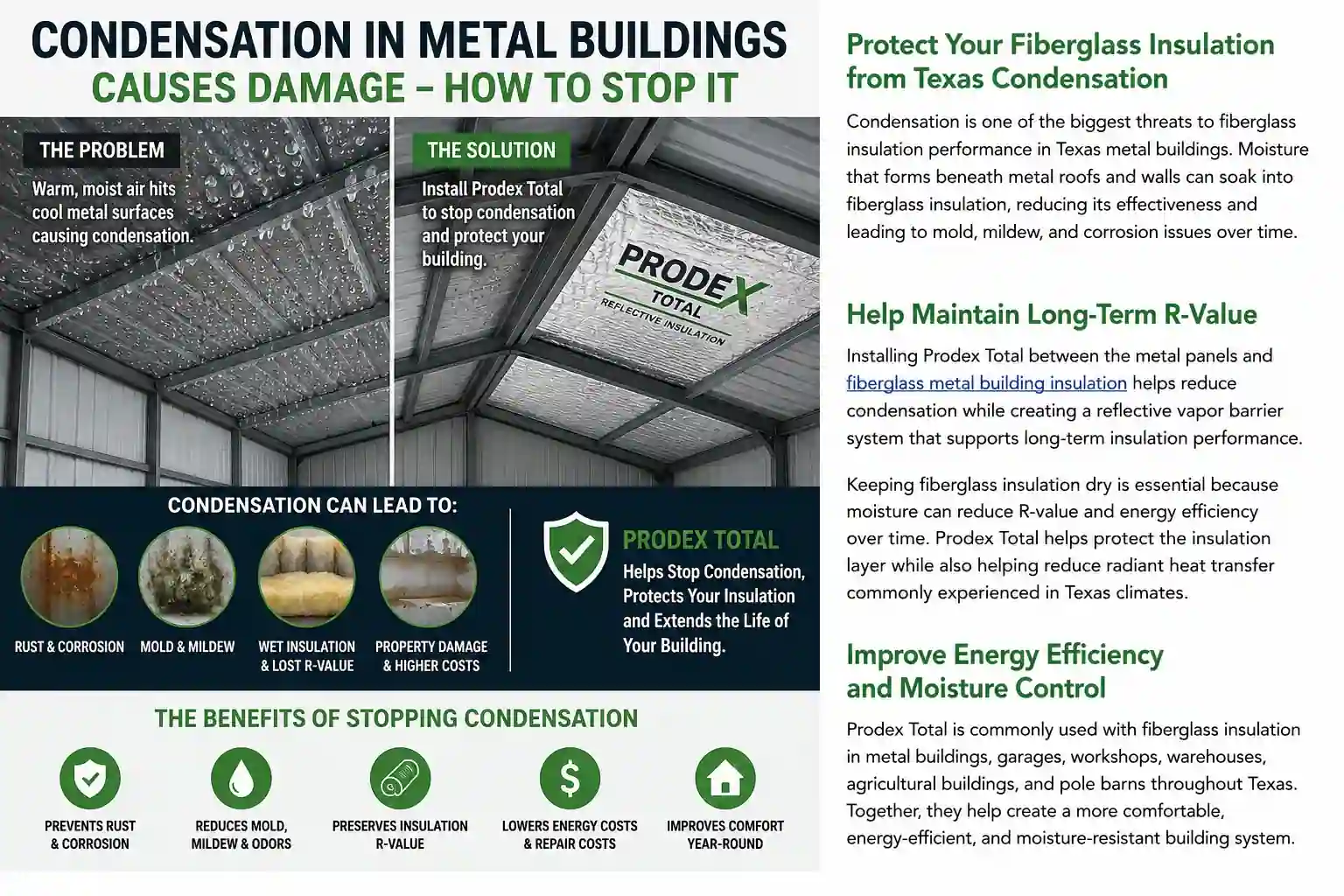
Condensation in Metal Buildings
Condensation is one of the most common and costly problems faced by owners of metal buildings. From rusted panels and dripping ceilings to mold growth and damaged inventory, uncontrolled moisture can shorten the lifespan of a structure and reduce its usability. Understanding why condensation forms—and how to stop it—is essential for protecting your metal building long-term.
What Is Condensation and Why Does It Occur?
Condensation occurs when warm, moisture-laden air comes into contact with a cooler surface and releases water droplets. Metal buildings are especially prone to this issue because steel rapidly changes temperature based on outdoor conditions.
When humid air inside the building meets cold metal panels, moisture forms almost instantly. This can happen in workshops, warehouses, agricultural buildings, garages, and commercial metal structures.
Common Causes of Condensation in Metal Buildings
Temperature Differences
Large swings between indoor and outdoor temperatures create ideal conditions for condensation, particularly overnight or during seasonal changes.

High Humidity Levels
Activities such as washing equipment, storing wet materials, livestock housing, or even human occupancy increase interior humidity.
Lack of Proper Insulation
Uninsulated or poorly insulated metal panels allow cold surfaces to remain exposed, encouraging moisture buildup.
Inadequate Ventilation
Without proper airflow, moist air becomes trapped and has nowhere to escape, increasing the likelihood of condensation.
Problems Caused by Condensation
Structural Damage
Repeated moisture exposure can lead to corrosion, rust, and premature failure of metal components.
Mold and Mildew Growth
Persistent damp conditions create an environment where mold and mildew thrive, posing health risks and unpleasant odors.
Damage to Stored Goods
Condensation can drip onto tools, machinery, inventory, and raw materials, causing rust, spoilage, or contamination.
Reduced Energy Efficiency
Moisture compromises insulation performance, making it harder and more expensive to maintain consistent indoor temperatures.
How to Prevent Condensation in Metal Buildings
Install Proper Insulation
Insulation is the most effective way to prevent condensation by reducing temperature differences and controlling moisture movement. A well-designed insulation system creates a thermal and vapor barrier between the metal panels and interior air.
Learn more about effective solutions here:
Metal Building Insulation to Stop Condensation, Heat, Cold, and Air
Use Vapor Barriers
A vapor barrier prevents warm, moist air from reaching cold metal surfaces. Without one, even insulated buildings can experience condensation problems.
Improve Ventilation
Proper ventilation helps remove excess moisture from the air and balances indoor humidity levels, especially in high-use or agricultural buildings.
Choosing the Right Insulation for Condensation Control
PRODEX® Total Insulation vs. Spray Foam
Spray foam insulation is often used in metal buildings, but it can be costly, difficult to remove, and permanent. PRODEX® Total Insulation offers a high-performance alternative that combines insulation, radiant barrier, vapor barrier, and sound control in one system—without the drawbacks of spray foam.
Read a detailed comparison here:
PRODEX® Total Insulation vs. Spray Foam Insulation for Metal Buildings
PRODEX® Total Insulation vs. Fiberglass
Fiberglass insulation can absorb moisture, lose effectiveness, and promote mold growth if condensation occurs. In contrast, PRODEX® Total Insulation does not absorb water and maintains its performance over time, making it ideal for condensation-prone metal structures.
Explore the differences here:
PRODEX® Total Insulation vs. Fiberglass Insulation for Metal Buildings
Our most effective roll at stopping condensation: 10M Prodex Total Insulation Plus
Protect Fiberglass Insulation from Condensation Damage
Condensation is one of the biggest threats to fiberglass insulation performance in metal buildings. When moisture forms beneath metal roofing and siding, fiberglass insulation can become saturated, reducing its thermal effectiveness and contributing to mold, mildew, rust, and corrosion problems over time.
Proper condensation control is essential for maintaining insulation performance, protecting the building structure, and improving long-term energy efficiency.
Help Preserve Long-Term R-Value
Installing Prodex Total between the metal panels and fiberglass metal building insulation helps create a reflective vapor barrier system that reduces condensation while helping preserve insulation efficiency over time.
Keeping fiberglass insulation dry is important because moisture can lower R-value, reduce energy efficiency, and shorten the lifespan of the insulation system. Prodex Total also helps reduce radiant heat transfer, improving indoor comfort in metal buildings year-round.
Improve Energy Efficiency and Moisture Control
Prodex Total is commonly installed with fiberglass insulation in metal buildings, garages, workshops, warehouses, agricultural buildings, and pole barns to help create a more energy-efficient and moisture-resistant building system.
By helping control condensation, reduce radiant heat, and protect insulation performance, Prodex Total supports a more durable, comfortable, and cost-effective building environment throughout the year.
Long-Term Benefits of Controlling Condensation
-Extended lifespan of your metal building
-Reduced maintenance and repair costs
-Improved indoor comfort and air quality
-Better protection for equipment, inventory, and occupants
-Increased energy efficiency year-round
Final Thoughts
Condensation in metal buildings is not just a nuisance—it’s a serious issue that can lead to long-term damage if left unaddressed. The good news is that with the right insulation system, vapor control, and ventilation strategy, condensation can be effectively eliminated.
By investing in a high-quality insulation solution designed specifically for metal buildings, you protect your structure, your assets, and your peace of mind for years to come.