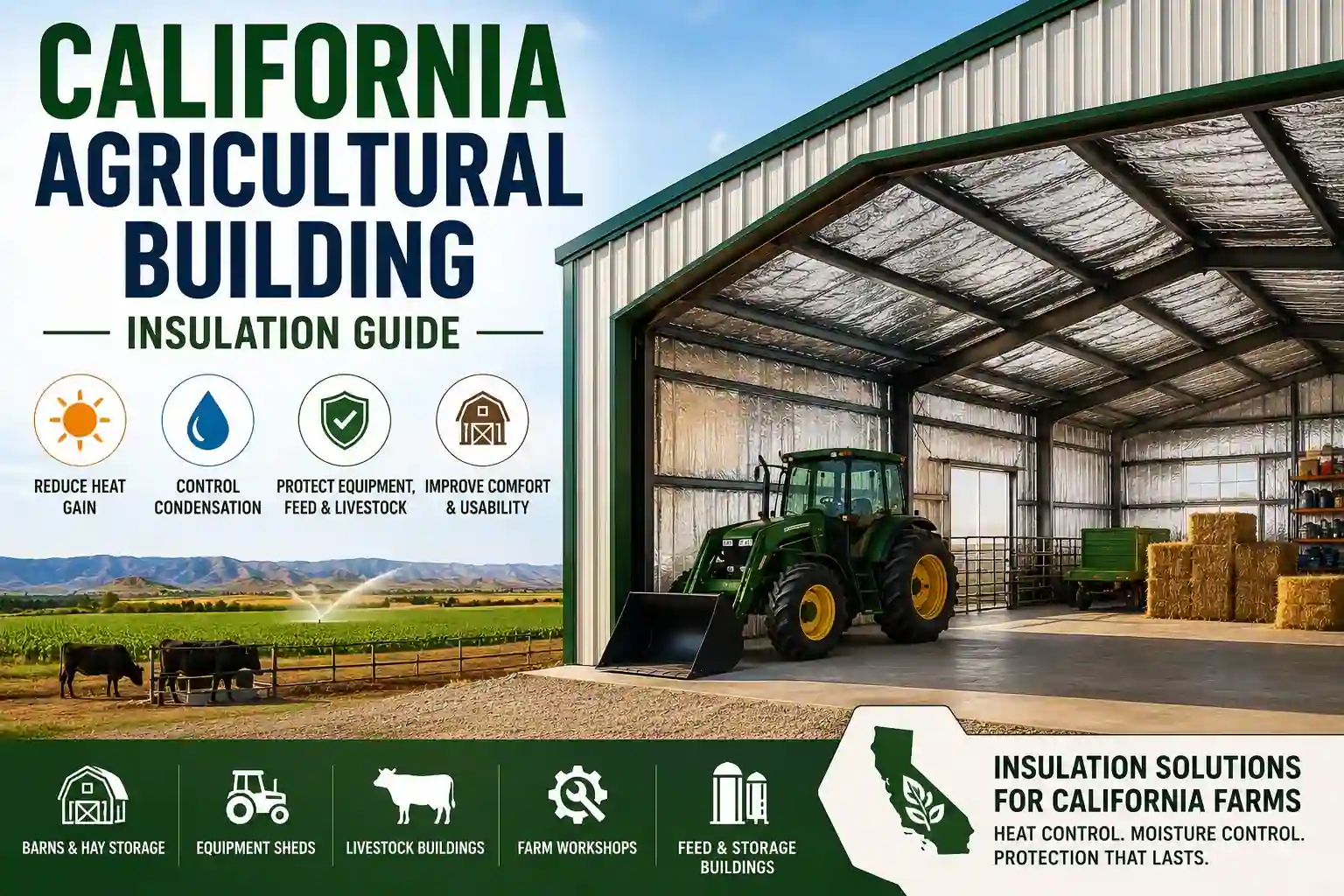
California Agricultural Building Insulation Guide
California is home to one of the largest agricultural industries in the world. From the Central Valley and Salinas Valley to Southern California and the northern agricultural regions, farmers and ranchers rely on agricultural buildings to protect equipment, feed, livestock, crops, and valuable assets.
Whether you own a hay barn, equipment shed, livestock building, workshop, storage facility, or agricultural metal building, proper insulation can help improve comfort, reduce heat gain, control condensation, and protect your investment.
Insulation4Less supplies insulation products throughout California, with typical delivery times of approximately one week for most orders.
California Insulation Resources
Agricultural buildings are just one part of California's diverse building landscape. If you're comparing insulation options for homes, workshops, garages, pole barns, and steel structures, visit our California Insulation Guide for a complete overview of insulation solutions throughout the state.
Why Agricultural Buildings Need Insulation
Many agricultural buildings are constructed using metal roofing and metal wall systems because they are durable, affordable, and low maintenance.
However, metal buildings can experience significant heat gain and condensation issues without proper insulation.
Common agricultural structures that benefit from insulation include:
Equipment storage buildings
Tractor sheds
Hay barns
Livestock shelters
Horse barns
Feed storage facilities
Agricultural workshops
Farm maintenance buildings
Storage warehouses
Insulation helps create a more stable interior environment while protecting valuable assets from heat and moisture.
If you are insulating an equestrian facility, our California Horse Barn Insulation Guide explains how insulation can help reduce heat, control condensation, and improve comfort for horses and caretakers.
Many agricultural facilities are constructed using steel framing and metal roofing systems. If your structure is primarily a steel building, our California Metal Building Insulation Guide explains how insulation can help reduce radiant heat gain and control condensation.
California Climate Challenges for Agricultural Buildings
California's agricultural regions experience a wide range of environmental conditions.
Central Valley
The Central Valley includes major agricultural areas such as:
Fresno
Bakersfield
Modesto
Stockton
Merced
Visalia
These regions frequently experience:
Extreme summer temperatures
Intense solar exposure
High cooling demands
Prolonged heat events
Agricultural buildings in these areas often struggle with excessive interior heat buildup.
Coastal Agricultural Regions
Areas such as:
Salinas
Santa Maria
Watsonville
Monterey
Often experience:
Coastal fog
Marine moisture
Humidity
Condensation concerns
Moisture control becomes especially important in agricultural storage buildings located near the coast.
Southern California Agricultural Areas
Agricultural operations throughout Southern California often face:
High temperatures
Strong sunlight
Long summers
Significant heat gain in metal structures
Insulation can help reduce the impact of solar heat on agricultural facilities.
The Impact of Heat on Agricultural Buildings
California agricultural buildings often experience significant roof heat gain during summer months. Learn more about reducing radiant heat and improving building comfort in our Best Insulation for California Heat guide.
Heat is one of the most common challenges facing California agricultural structures. During summer months, uninsulated metal roofs absorb solar energy throughout the day. As roof temperatures increase, radiant heat transfers into the building below. This can create uncomfortable and potentially damaging conditions.
Problems Caused by Excessive Heat
Excessive heat can affect:
Stored equipment
Feed supplies
Agricultural products
Maintenance activities
Livestock comfort
Building usability
Many property owners are surprised by how much interior temperatures can increase inside uninsulated agricultural buildings during California summers.
Understanding Condensation in Agricultural Buildings
Condensation occurs when warm, moisture-laden air contacts cooler metal surfaces. While many people associate condensation with colder climates, it is common throughout California.
Agricultural buildings frequently experience condensation due to:
Daily temperature swings
Coastal moisture
Seasonal weather changes
Humidity generated by livestock
Ventilation differences
Problems Caused by Condensation
Uncontrolled condensation can result in:
Rust and corrosion
Water dripping from ceilings
Mold and mildew growth
Damaged feed
Wet hay and stored materials
Equipment deterioration
Managing condensation is often just as important as controlling heat. Condensation can damage feed, hay, equipment, and agricultural supplies. Visit our Stop Condensation in California Metal Buildings guide to learn how insulation helps reduce moisture problems.
Best Insulation for California Agricultural Buildings
The ideal insulation solution depends on the building's location, design, and intended use.
Many California agricultural property owners look for insulation systems that help:
Reduce radiant heat transfer
Control condensation
Improve interior comfort
Protect equipment and inventory
Support year-round building use
For agricultural metal buildings, reflective insulation is often chosen because it can help address both heat gain and moisture concerns.
Equipment Storage Building Insulation
Pole barns are one of the most common agricultural building types used throughout California farms and ranches. Our California Pole Building Guide covers insulation strategies for equipment sheds, livestock shelters, workshops, and agricultural storage buildings.
Farm equipment represents a major investment. Tractors, harvesters, implements, utility vehicles, and specialized agricultural equipment benefit from protection against excessive heat and moisture exposure.
Insulated equipment buildings can help:
Reduce interior temperatures
Minimize condensation
Protect finishes and components
Improve long-term equipment storage conditions
Farm workshops and maintenance buildings often benefit from insulation that helps control heat, heat loos, and condensation. Learn more in our California Garage & Workshop Insulation Guide.
Hay Barn and Feed Storage Insulation
Proper storage conditions are important for maintaining the quality of hay, feed, and agricultural supplies.
Insulation can help:
Reduce temperature fluctuations
Limit moisture-related issues
Improve overall storage conditions
Support building performance throughout the year
Agriculural warehouses often store equipment, feed, supplies, and inventory that benefit from temperature and moisture control.
Our California Warehouse Insulation Guide explains how insulation can help protect valuable assets throughout the year.
Livestock Building Insulation
Livestock facilities often require careful management of both temperature and moisture. Proper insulation can help create a more stable environment while supporting overall building comfort and functionality.
Common livestock structures include:
Horse barns
Cattle shelters
Poultry buildings
Small animal facilities
Agricultural support structures
Many farms and ranches icorporate Barndominiums that combine residential living space with agricultural functionality. Our California Barndominium Insulation Guide explores insulation strategies for these unique structures.
Benefits of Insulating Agricultural Buildings
Reduced Heat Gain
Help block radiant heat from metal roofs and walls.
Condensation Control
Reduce moisture buildup on interior metal surfaces.
Equipment Protection
Protect valuable agricultural machinery and tools.
Improved Storage Conditions
Support better conditions for feed, supplies, and agricultural products.
Greater Building Comfort
Create a more usable environment for workers and daily operations.
Fast California Delivery
Insulation4Less serves agricultural customers throughout California, including:
Fresno
Bakersfield
Modesto
Stockton
Visalia
Merced
Sacramento
Salinas
Santa Maria
Riverside
Most California insulation orders arrive in approximately one week, helping farmers, ranchers, and agricultural businesses complete projects without unnecessary delays.
Explore More California Insulation Resources
Different agricultural buildings face different insulation challenges depending on their location, design, and intended use.
For additional information, visit:
- California Insulation Guide – Learn about insulation solutions for homes, metal buildings, pole barns, workshops, garages, and agricultural structures throughout California.
- California Metal Building Insulation Guide – Discover how to reduce radiant heat gain, improve comfort, and prevent condensation in California steel buildings.