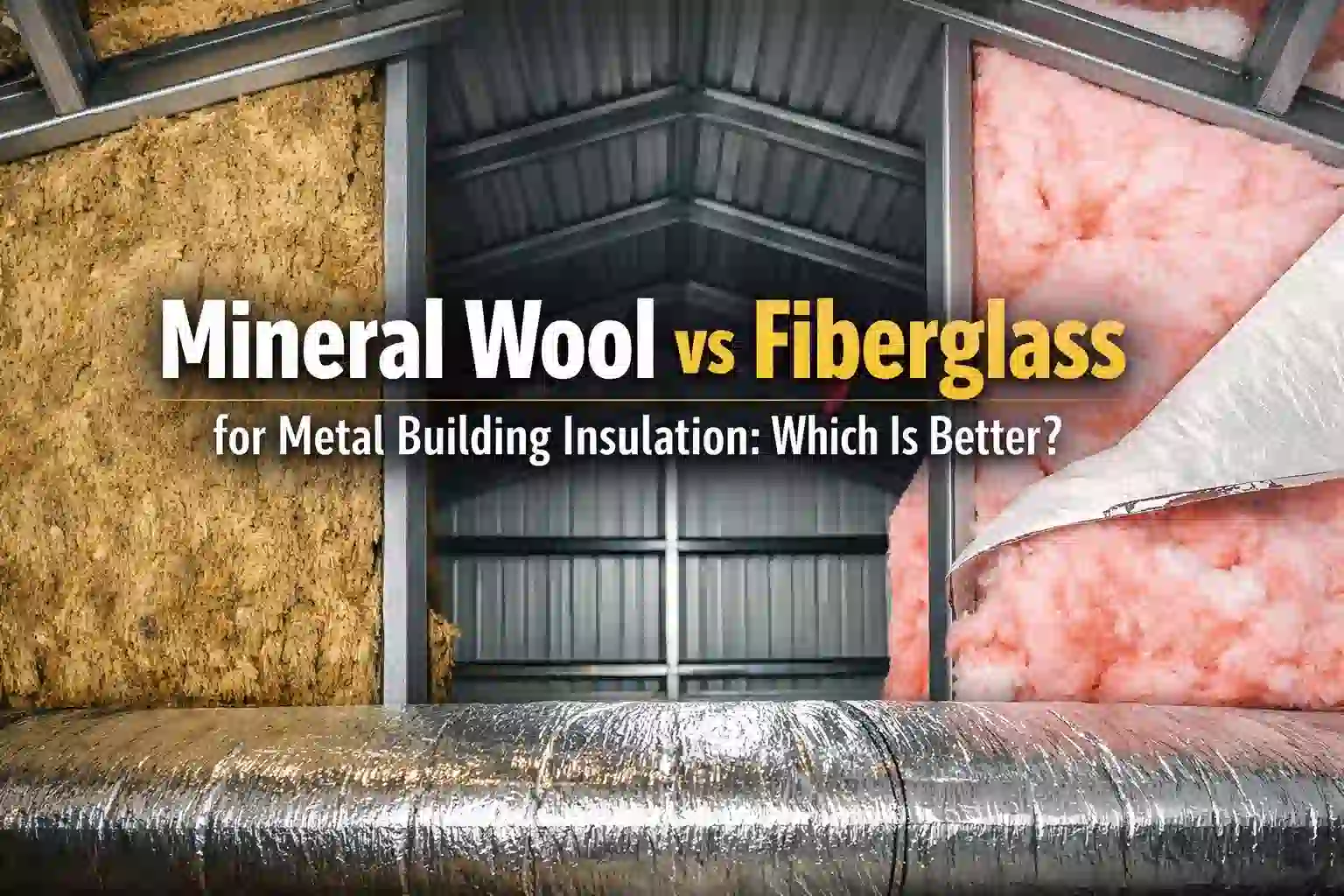
Mineral Wool vs Fiberglass for Metal Building Insulation: Which is Better?
If you’re insulating a metal building, the mineral wool vs fiberglass decision usually comes down to performance priorities: fire resistance, sound control, thermal value, moisture handling, and cost.
But there’s a catch: both mineral wool and fiberglass can still struggle with the #1 issue in metal buildings — condensation — unless they’re installed as part of a complete vapor-control system. That’s why many metal building owners ultimately choose Prodex Total, which combines insulation value with built-in vapor control and reflective performance in one system.
If you’re dealing with sweating panels, dripping ceilings, or humidity problems, start with this condensation-focused guide:
Related: Metal Building Insulation to Stop Condensation, Heat, Cold & Air
Looking for a broader comparison? Read our Complete Guide to Metal Building Insulation to learn how fiberglass, mineral wool, spray foam, reflective insulation, and vapor barriers work together to control heat transfer and condensation in steel buildings.
Quick Comparison: Mineral Wool vs Fiberglass (and Why Many Choose Prodex Total Instead)
| Feature | Mineral Wool | Fiberglass | Prodex Total |
|---|---|---|---|
| Condensation Control | Good (system dependent) | Good (system dependent) | Excellent (built-in vapor barrier) |
| Moisture Resistance | Excellent | Moderate | Excellent |
| Fire Resistance | Excellent | Good | Very good (application dependent) |
| Sound Control | Excellent | Good | Moderate |
| R-Value / Thermal Value | Good | Good | Strong overall + reflective performance |
| Air Sealing | Moderate | Moderate | Excellent |
| Install Complexity | Moderate | Easy | Fast + clean |
| Typical Best Use | Fire + sound priority | Budget builds | Condensation + all-around performance |
What Mineral Wool Does Well in Metal Buildings
Mineral wool (rock wool) is a dense insulation made from spun stone fibers. It’s a strong choice when you need:
Excellent fire resistance
Great sound dampening
Strong moisture tolerance
Durability in tough environments
That said, mineral wool insulation still relies on proper detailing to control condensation in metal buildings (air leaks + vapor drive are usually the real culprits).
If you want a direct product-style comparison, we break it down here:
Related: Mineral Wool for Metal Buildings vs Prodex Total
What Fiberglass Does Well in Metal Buildings
Fiberglass is the most common metal building insulation because it’s:
Affordable
Easy to install at scale
Available in facing-backed metal building systems
Strong R-value per dollar
But fiberglass performance is also highly dependent on installation quality. If the vapor barrier isn’t sealed perfectly, warm moist air can reach cold metal panels and create condensation — even with good R-values.
Related: Fiberglass Metal Building Insulation
The Real Issue: Condensation Is Where Mineral Wool and Fiberglass Often Lose
In a metal building, condensation isn’t just “cold meets warm.” It’s usually caused by:
Air leaks pushing humid air to cold panels
Poorly sealed vapor barriers
Temperature swings on metal skins
High interior humidity (shops, livestock, wash bays, storage)
Mineral wool and fiberglass both can work…
…but they typically need additional layers and careful sealing to truly stop sweating metal. And that’s exactly why Prodex Total is often the smarter solution: it’s designed to solve condensation at the source by combining insulation + vapor control into a single system.
Related: How to Stop Condensation in a Metal Building
Mineral Wool vs Fiberglass: Category-by-Category
1) Condensation Control
Mineral wool: Handles moisture better, but still needs correct vapor/air control.
Fiberglass: Traps moisture; condensation risk exists.
Prodex Total: Purpose-built for condensation control with an integrated vapor barrier approach.
If condensation is your main concern, you’ll also want this comparison:
Related: Spray Foam vs Fiberglass for Metal Buildings (Best for Condensation) : Mineral Wool vs Spray Foam for Metal Buildings
Winner: Prodex Total (best system-level condensation performance)
2) Moisture Resistance
Mineral wool: Excellent; doesn’t absorb water easily.
Fiberglass: Can lose performance when wet and can trap moisture if not detailed well.
Prodex Total: Excellent; resists moisture issues and is designed around vapor control.
Winner: Mineral wool / Prodex Total (tie depending on goal)
3) Fire Resistance
Mineral wool: Best-in-class fire performance.
Fiberglass: Generally good, but facings can be a factor.
Prodex Total: Very good for typical metal building applications, but mineral wool remains the top for pure fire resistance.
Winner: Mineral wool (fire-only priority)
4) Sound Control
Mineral wool: Excellent (dense = better sound absorption).
Fiberglass: Good.
Prodex Total: Moderate (not primarily designed for acoustics).
Winner: Mineral wool
5) Overall Comfort + Energy Efficiency
Fiberglass and mineral wool both provide solid thermal performance, but metal buildings often leak air — and air leakage is where real comfort loss happens.
That’s another reason Prodex Total often outperforms “insulation-only” approaches in real-world metal buildings: it can reduce heat transfer while also supporting tighter building envelope performance.
Winner: Prodex Total (overall performance in typical metal buildings)
So… Which One Should You Choose?
Choose Mineral Wool if you want:
Maximum fire resistance
Best sound control
Industrial/commercial durability
Choose Fiberglass if you want:
Best budget option
Quick, common installation
Strong R-value per dollar (when correctly detailed)
Choose Prodex Total if you want the best overall outcome:
If your top priorities include condensation control, a clean install, and all-in-one performance, Prodex Total is often the better choice than both mineral wool and fiberglass — especially in metal buildings where sweating panels are the problem.
To see the direct head-to-head:
Related: Compare Mineral Wool and Prodex Total
Best Use Cases
Fire + Sound Priority: Mineral wool
Lowest Cost Large Projects: Fiberglass
Condensation + All-Around Metal Building Performance: Prodex Total
FAQ: Mineral Wool vs Fiberglass in Metal Buildings
Is mineral wool better than fiberglass for metal buildings?
Often yes for fire, sound, and moisture tolerance — but both can still struggle with condensation if the vapor barrier and air sealing aren’t handled correctly.
Which is best for condensation control in a metal building?
In many real-world metal buildings, Prodex Total is the better choice because it’s designed specifically to prevent condensation with a built-in vapor control approach.
What if I already have condensation problems?
Start here to diagnose and fix the root causes:
Related: Metal Building Insulation for Condensation Control