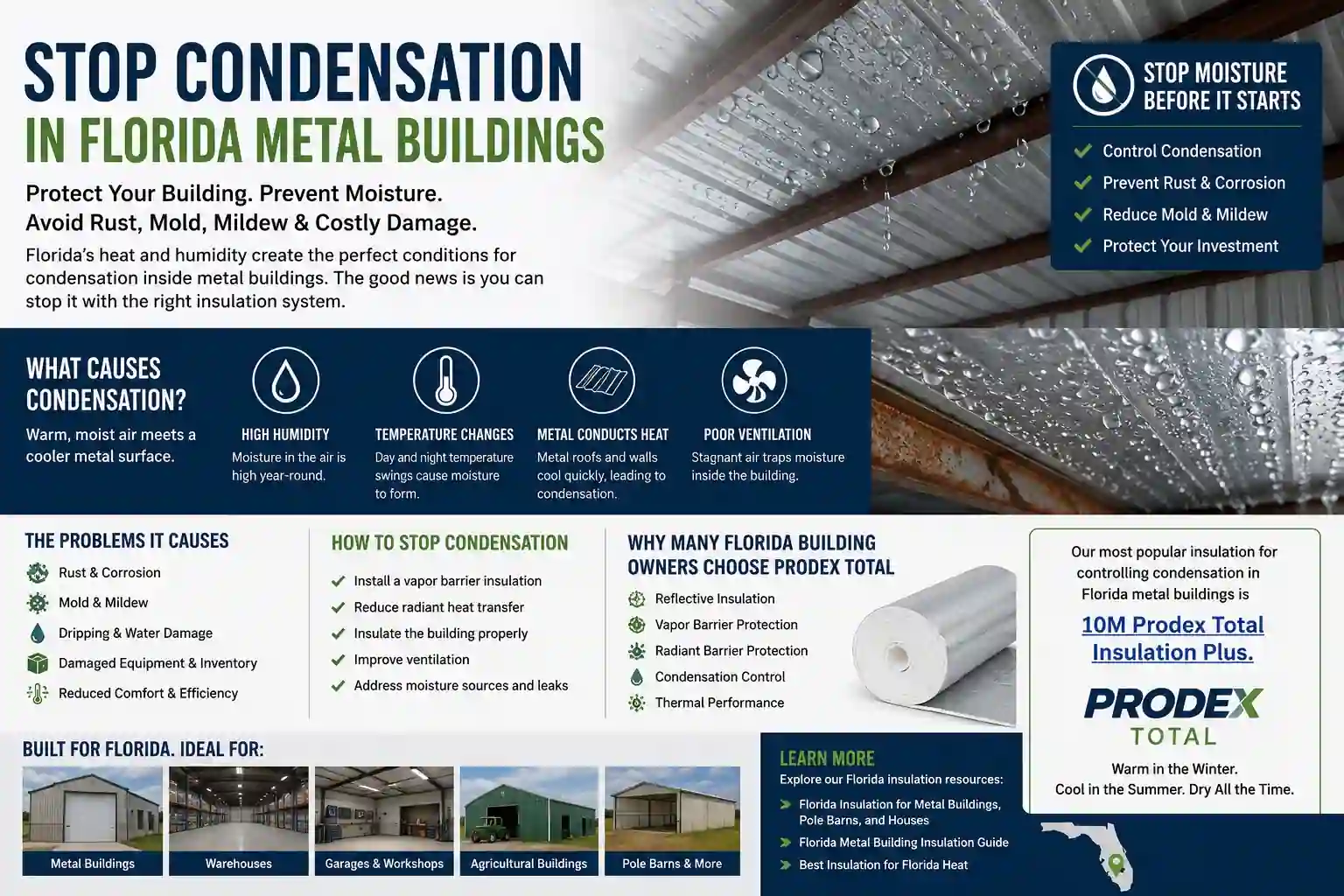
Stop Condensation in Florida Metal Buildings
Condensation is one of the most common and costly problems affecting Florida metal buildings. High humidity, frequent rain, and warm temperatures create ideal conditions for moisture to form on metal roofs and walls.
Whether you own a warehouse, workshop, garage, agricultural building, storage facility, or commercial structure, uncontrolled condensation can lead to rust, mold, mildew, equipment damage, and costly repairs.
Understanding what causes condensation—and how to prevent it—can help protect your building and improve long-term performance.
For a broader overview of insulation options throughout the state, see our Florida Insulation for Metal Buildings, Pole Barns, and Houses guide.
What Causes Condensation in Florida Metal Buildings?
Condensation occurs when warm, moisture-laden air comes into contact with a cooler surface. In metal buildings, this often happens when humid Florida air contacts cooler metal roof panels or wall panels.
The result can be:
Water droplets forming on ceilings
Dripping roof panels
Damp insulation
Wet floors
Rust and corrosion
Mold and mildew growth
Because Florida experiences high humidity throughout much of the year, condensation problems can occur even when outdoor temperatures are relatively warm.
Why Florida Is Especially Vulnerable to Condensation
Florida's climate creates several factors that increase condensation risk:
High Humidity
Florida consistently experiences high humidity levels, which means the air contains large amounts of moisture.
Frequent Temperature Changes
Daytime heating and nighttime cooling can create temperature differences that encourage moisture formation.
Metal Construction
Metal transfers temperature quickly, making steel roofs and walls more susceptible to condensation than many other building materials.
Limited Ventilation
Poor airflow can trap humid air inside the building, increasing the likelihood of condensation.
Problems Caused by Condensation
Many building owners underestimate the damage condensation can cause.
Over time, excess moisture can contribute to:
Rust and Corrosion
Moisture exposure can accelerate corrosion of metal panels, fasteners, and structural components.
Mold and Mildew
Persistent moisture creates conditions that support mold and mildew growth.
Damaged Insulation
Some insulation materials lose effectiveness when exposed to moisture.
Equipment Damage
Condensation can damage tools, machinery, electronics, inventory, and stored materials.
Reduced Comfort
Excess moisture can make buildings feel damp, uncomfortable, and difficult to condition.
How to Stop Condensation in Florida Metal Buildings
Successful condensation control requires addressing both moisture and temperature differences.
Install a Vapor Barrier
A vapor barrier helps reduce moisture movement and limits the conditions that allow condensation to form.
Reduce Radiant Heat Transfer
Controlling heat transfer can help reduce temperature swings that contribute to condensation.
For additional information about heat control, see our Best Insulation for Florida Heat guide.
Insulate the Building Properly
Proper insulation can help reduce the likelihood of condensation while improving comfort and energy efficiency.
Learn more in our Florida Metal Building Insulation Guide.
Improve Ventilation
Ventilation helps remove excess humidity and improves airflow throughout the building.
Address Moisture Sources
Water intrusion, leaks, and standing water can increase humidity levels inside the structure.
Why Many Florida Building Owners Choose Prodex Total
Prodex Total combines:
Reflective insulation
Vapor barrier protection
Radiant barrier protection
Condensation control
Thermal performance
Unlike fiberglass, Prodex Total does not absorb water and does not support mold growth.
Our most popular insulation for controlling condensation in Florida metal buildings is 10M Prodex Total Insulation Plus.
Warm in the Winter. Cool in the Summer. Dry All the Time.
Buildings That Benefit from Condensation Control
Condensation control is important for:
Metal warehouses
Workshops
Garages
Agricultural buildings
Equipment storage facilities
Commercial buildings
Horse barns
Pole barns
Any structure with metal roofing or wall panels can experience condensation issues when moisture is not properly managed.
Warehouse owners can learn more in our Florida Warehouse Insulation Guide.
Frequently Asked Questions
Why does my metal building roof drip water?
This is often caused by condensation. Warm, humid air contacts a cooler metal surface, causing moisture to form and eventually drip.
Does insulation stop condensation?
Proper insulation can help reduce the conditions that allow condensation to form by limiting temperature differences and controlling moisture movement.
Is condensation common in Florida metal buildings?
Yes. Florida's combination of heat and humidity makes condensation one of the most common issues affecting metal buildings.
Can condensation cause rust?
Yes. Long-term moisture exposure can contribute to rust and corrosion of metal components.
What insulation helps control condensation in metal buildings?
Many Florida building owners choose insulation systems that combine vapor barrier protection, radiant heat control, and moisture resistance.
Warm in the Winter. Cool in the Summer. Dry All the Time.