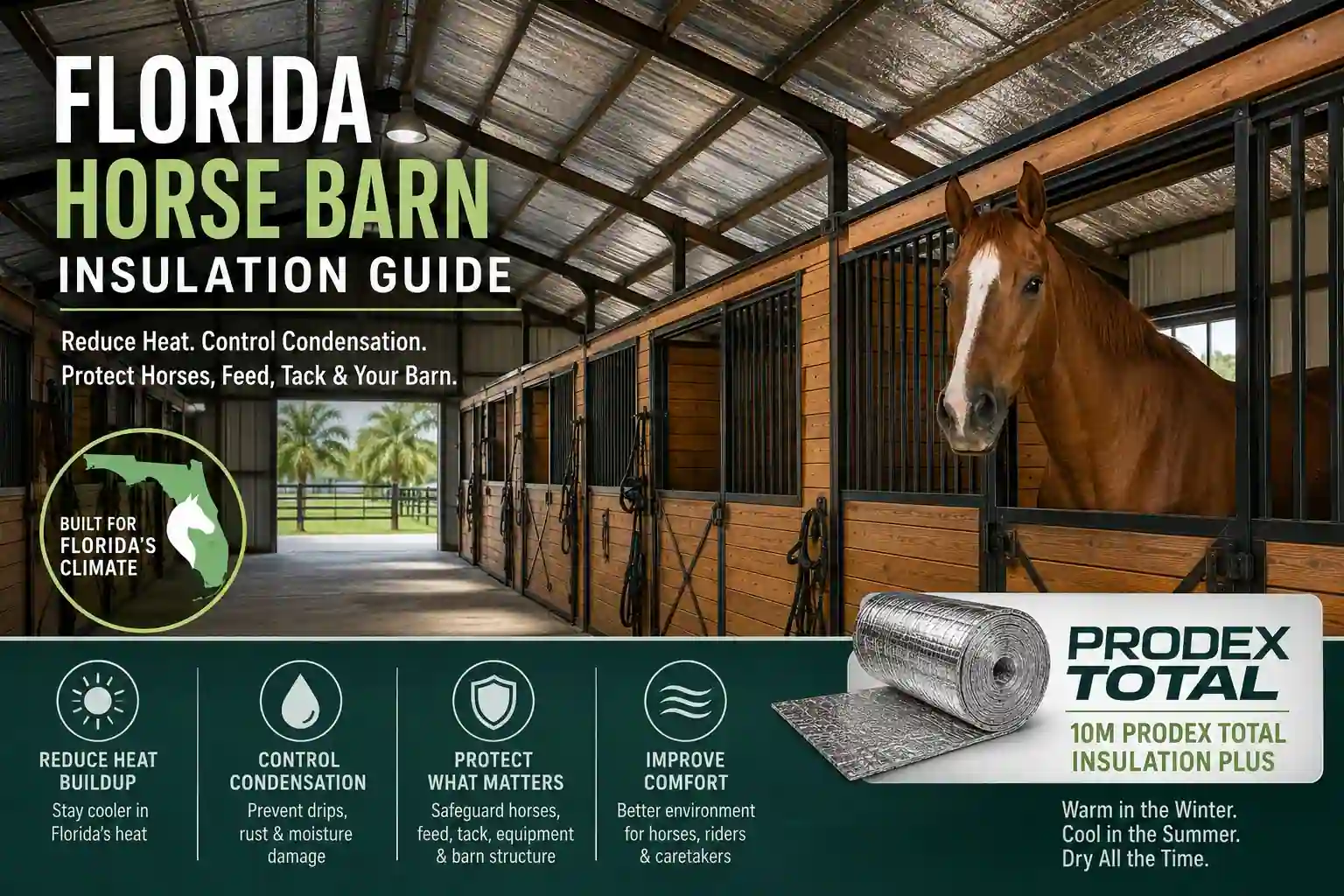
Florida Horse Barn Insulation Guide
Florida horse owners face unique challenges when it comes to barn comfort and moisture control. High temperatures, intense sunshine, humidity, and frequent rain can create uncomfortable conditions for horses, riders, trainers, and caretakers.
Whether you own a small private horse barn, a boarding facility, a training center, or an equestrian complex, proper insulation can help improve comfort, reduce condensation, and protect your investment.
For a broader overview of insulation options throughout the state, visit our Florida Insulation for Metal Buildings, Pole Barns, and Houses guide.
Many horse barns are part of larger agricultural operations. For insulation recommendations covering farm shops, equipment storage buildings, livestock facilities, hay storage, and agricultural warehouses, see our Florida Agricultural Building Insulation Guide.
Why Horse Barns Need Insulation in Florida
Florida's climate can place significant stress on both horses and buildings.
Common challenges include:
Excessive summer heat
High humidity
Condensation
Moisture damage
Rust and corrosion
Mold and mildew growth
Proper insulation helps create a more comfortable environment while protecting the structure itself.
Horse barns are often built as pole barns or metal-framed agricultural buildings. For related building types, see our Florida Pole Barn Insulation Guide and Florida Metal Building Insulation Guide.
Heat Stress and Horse Comfort
Horses can be particularly sensitive to prolonged heat exposure.
Florida barns often experience elevated interior temperatures due to:
Direct sunlight
Metal roofing
Poor ventilation
Lack of insulation
Reducing heat gain can help create a more comfortable environment for horses, riders, and barn staff.
For additional information about reducing heat inside Florida buildings, see our Best Insulation for Florida Heat guide.
Condensation Problems in Florida Horse Barns
Condensation is one of the most overlooked problems affecting horse barns.
When warm, humid air contacts cooler metal surfaces, moisture forms.
This can lead to:
Dripping ceilings
Damp bedding
Rust
Mold and mildew
Moisture damage
Learn more in our Stop Condensation in Florida Metal Buildings guide.
Protecting Feed, Tack, and Equipment
Horse barns often contain valuable equipment and supplies including:
Saddles
Tack
Feed
Hay
Grooming equipment
Farm tools
Reducing heat and moisture exposure helps protect these investments and improve storage conditions.
Horse barn owners who store hay, feed, or agricultural equipment may also benefit from recommendations found in our Florida Agricultural Building Insulation Guide.
Metal Horse Barns
Many Florida horse barns utilize metal roofing and steel building systems because they are durable and economical. However, metal buildings can experience significant heat gain and condensation without proper insulation.
For metal-specific recommendations, visit our Florida Metal Building Insulation Guide.
Horse barns are one of the most common types of agricultural buildings in Florida. For broader farm-building insulation strategies, visit our Florida Agricultural Building Insulation Guide.
Horse Barns, Pole Barns, and Barndominiums
Many Florida horse properties include multiple building types, including pole barns, garages, workshops, storage buildings, and barndominiums.
If your horse barn is built with post-frame construction, see our Florida Pole Barn Insulation Guide.
For equestrian properties with residential metal-building construction, visit our Florida Barndominium Insulation Guide.
Garages, Workshops, and Storage Areas on Horse Properties
Many equestrian facilities include garages, tack rooms, workshops, equipment bays, and storage areas. These spaces can also experience heat buildup and condensation in Florida's humid climate.
For related structures, see our Florida Garage and Workshop Insulation Guide.
Larger Equestrian and Agricultural Facilities
Boarding facilities, training centers, covered arenas, and large agricultural operations may include warehouse-style buildings for feed, equipment, supplies, and storage.
For larger commercial and storage buildings, see our Florida Warehouse Insulation Guide.
Benefits of Insulating a Horse Barn
Proper insulation can help:
Reduce heat buildup
Improve horse comfort
Control condensation
Protect feed and equipment
Reduce moisture problems
Improve working conditions
These benefits can contribute to a healthier and more comfortable environment for both horses and caretakers.
Why Many Florida Horse Owners Choose Prodex Total
Prodex Total combines:
Reflective insulation
Vapor barrier protection
Radiant barrier protection
Condensation control
Thermal performance
Unlike fiberglass, Prodex Total does not absorb moisture and does not support mold growth.
Our most popular insulation for Florida horse barns is 10M Prodex Total Insulation Plus.
Warm in the Winter. Cool in the Summer. Dry All the Time.
Horse Barn Ventilation and Insulation
Ventilation and insulation work together.
While ventilation helps remove excess moisture and improve airflow, insulation helps reduce heat gain and condensation. Using both strategies together often provides the best overall performance.
Larger Equestrian and Agricultural Facilities
Boarding facilities, training centers, covered arenas, and large agricultural operations may include warehouse-style buildings for feed, equipment, supplies, and storage.
For larger commercial and storage buildings, see our Florida Warehouse Insulation Guide.
That gives the Horse Barn article embedded links to the full Florida cluster, including the warehouse page.
Choosing the Best Horse Barn Insulation
When selecting insulation for a Florida horse barn, consider:
Heat Reduction
Reducing radiant heat can improve comfort throughout the barn.
Moisture Resistance
Florida humidity makes moisture resistance extremely important.
Condensation Protection
Controlling condensation helps protect horses, equipment, feed, and building materials.
Durability
Horse barns require insulation systems capable of handling long-term exposure to demanding conditions.
Frequently Asked Questions
Does insulation make a horse barn cooler?
Proper insulation can help reduce heat gain and improve overall comfort. For more information about heat control, see our Best Insulation for Florida Heat guide.
Why does my horse barn roof drip water?
This is often caused by condensation forming on cooler metal surfaces. Learn more in our Stop Condensation in Florida Metal Buildings guide.
Can insulation help reduce condensation?
Yes. Proper insulation can help reduce the conditions that allow condensation to form.
What is the best insulation for Florida horse barns?
Many horse owners choose insulation systems that combine radiant heat protection, vapor barrier protection, and condensation control.
Is insulation important for metal horse barns?
Yes. Metal horse barns often experience significant heat gain and condensation without proper insulation. See our Florida Metal Building Insulation Guide for more information.
Warm in the Winter. Cool in the Summer. Dry All the Time.