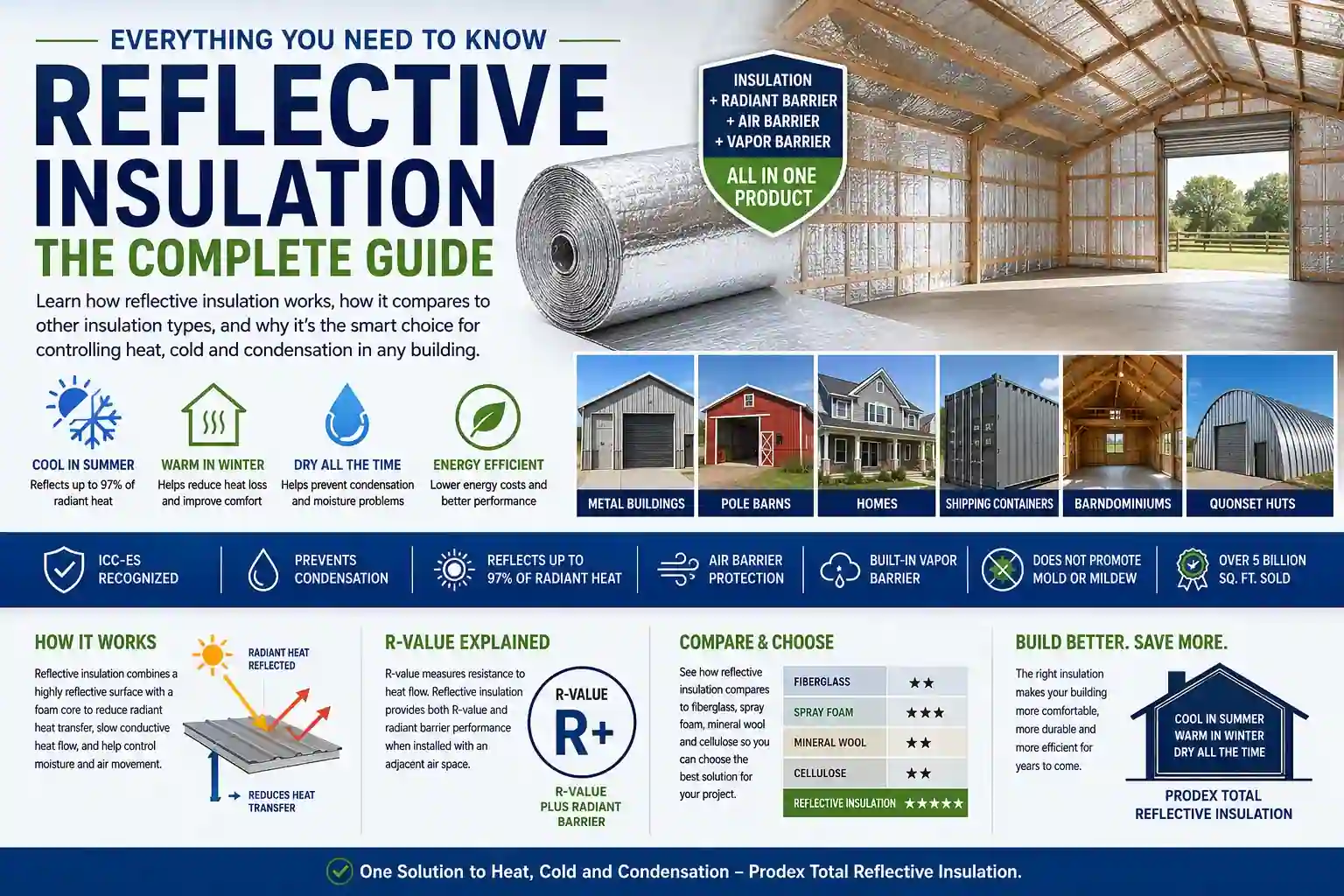
The Ultimate Reflective Insulation Guide: Everything You Need to Know Before You Buy
Learn How Reflective Insulation Works, Compare Insulation Types and Choose the Best Solution for Your Building
Table of Contents
Whether you're researching reflective insulation for the first time, comparing insulation systems or preparing to choose the best insulation for your project, this guide will help you quickly jump to the information you're looking for.
Reflective Insulation Fundamentals
Compare Reflective Insulation
Choose the Best Reflective Insulation for Your Building
Solve Common Building Problems
Ready to Buy Reflective Insulation?
What You'll Learn in This Guide
By the time you finish reading, you'll understand:
What reflective insulation is and how it works
What R-value measures—and why it isn't the only factor that matters
Why builders choose reflective insulation over fiberglass
How reflective insulation compares with spray foam, mineral wool and cellulose
Which reflective insulation is best for your building
How reflective insulation helps control heat, cold and condensation
Where to buy genuine Prodex Total Reflective Insulation
What Is Reflective Insulation?
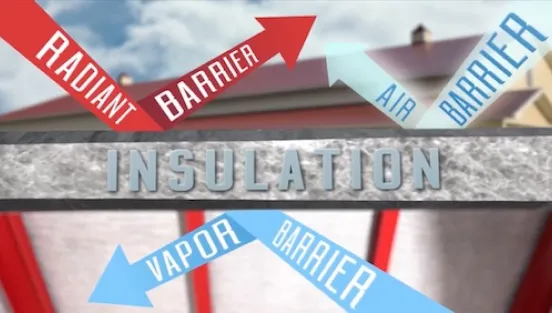
Reflective insulation is an insulation system that uses highly reflective aluminum foil surfaces together with a thermal core to reduce radiant heat transfer while also slowing conductive and convective heat flow. Unlike traditional insulation materials that primarily rely on thickness, reflective insulation works by reflecting radiant energy away from the structure while simultaneously acting as an air barrier and vapor barrier.
One of the most popular types of reflective insulation is bubble wrap insulation, which is available in both single bubble and double bubble configurations. Learn how bubble insulation works, where it's commonly used, and how it compares with other reflective insulation systems.
Quality reflective insulation systems such as Prodex Total combine four functions into one product:
• Thermal insulation
• Vapor barrier
• Air barrier
This combination makes reflective insulation especially effective in metal buildings, pole barns, homes, shipping containers, garages, agricultural buildings, RVs and many other applications where heat gain, heat loss and condensation are concerns.
What Is R-Value?
If you've researched insulation, you've probably seen products advertised by their R-value. While R-value is an important measurement, it is often misunderstood. Choosing insulation based only on R-value can overlook other factors that significantly affect a building's comfort, energy efficiency and moisture control.
What Does R-Value Mean?
R-value is a measurement of an insulation material's resistance to conductive heat flow. In simple terms, the higher the R-value, the greater the material's ability to slow heat moving through it by conduction.
Conductive heat transfer occurs when heat moves through solid materials such as wood, steel, drywall or insulation. Most traditional insulation products, including fiberglass, mineral wool, cellulose and spray foam, are primarily evaluated by their conductive resistance.
R-Value Is Only One Part of Building Performance
Heat moves in three different ways:
Conduction – heat moving through solid materials.
Convection – heat moving through moving air.
Radiation – heat traveling as infrared energy.
Traditional R-value testing focuses primarily on conductive heat transfer. However, in many buildings—especially metal buildings, pole barns, garages and warehouses—radiant heat and air leakage can account for a significant portion of unwanted heat gain and heat loss.
This is why evaluating insulation solely by its R-value does not always provide the complete picture.
Why Reflective Insulation Is Different
Unlike traditional insulation materials, reflective insulation helps control all three methods of heat transfer. It reduces conductive heat flow through its thermal core, reflects radiant heat away from the building and helps limit convective heat transfer by functioning as an air barrier.
In addition, Prodex Total reflective insulation includes a built-in vapor barrier that helps control moisture and condensation—performance characteristics that are not reflected by an R-value alone.
Not all reflective insulation products are built the same. Compare single bubble insulation, double bubble insulation, foil-only radiant barriers, and Prodex Total to understand their construction, R-value, condensation control, and long-term durability differ.
Why Air Leakage and Moisture Matter
Even insulation with a high laboratory R-value may not perform as expected if air moves through it or if moisture reduces its effectiveness. Air leakage, gaps, compression and wet insulation can all reduce real-world thermal performance.
Because reflective insulation also serves as an air barrier and vapor barrier, it helps maintain more consistent performance while reducing unwanted air movement and helping prevent condensation.
Assembly R-Value vs. Material R-Value
Another important concept is the difference between a material R-value and an assembly R-value.
A material R-value measures only the insulation itself under controlled laboratory conditions. An assembly R-value measures the performance of the entire building system, including framing, air spaces, reflective surfaces and insulation working together.
Because reflective insulation depends on adjacent air spaces to reduce radiant heat transfer, its performance is evaluated as part of a complete assembly rather than simply measuring the foil material by itself.
Choosing Insulation Based on More Than R-Value
The best insulation system should do more than simply provide a high R-value. It should also help reduce radiant heat gain, control air leakage, prevent condensation and improve long-term energy efficiency.
That is why reflective insulation has become a popular choice for metal buildings, pole barns, homes, shipping containers, garages, barndominiums and Quonset huts. It combines thermal insulation, a radiant barrier, an air barrier and a built-in vapor barrier into one product, helping solve multiple building performance challenges simultaneously.
In the next section, we'll look at how reflective insulation works and why understanding conduction, convection and radiation is essential to understanding its real-world performance.
Cool in the Summer. Warm in the Winter. Dry all the Time. One Solution to heat, cold and Condensation – Prodex Total.
Why R-Value Alone Doesn't Tell the Whole Story
For decades, consumers have been taught that choosing insulation is as simple as comparing R-values. While R-value is an important measurement, it is only one part of a much larger picture. Buildings do not gain or lose heat through conduction alone, and real-world insulation performance depends on much more than a single laboratory number.
Traditional R-value testing measures an insulation material's resistance to conductive heat flow under controlled conditions. In an actual building, however, heat is transferred by conduction, convection and radiation. Air leakage, moisture, installation quality and building design can all influence how well an insulation system performs after it is installed.
This is particularly true in metal buildings, pole barns, garages, warehouses, shipping containers and agricultural buildings, where radiant heat and condensation often become larger concerns than conductive heat transfer alone.
For example, fiberglass insulation may have a high laboratory R-value, but if air moves through it, if it becomes compressed or if moisture reduces its effectiveness, its real-world performance can decline. Likewise, an insulation system that does not address radiant heat may still allow significant solar heat to enter a building through a hot metal roof.
Reflective insulation approaches the problem differently. Instead of relying solely on conductive resistance, reflective insulation helps reduce all three methods of heat transfer. It slows conductive heat flow with its thermal core, reflects radiant heat away from the building and limits convective heat transfer by functioning as an air barrier. At the same time, Prodex Total reflective insulation includes a built-in vapor barrier that helps control condensation—an important performance benefit that is not represented by an R-value alone.
This is why two insulation systems with similar R-values may perform very differently depending on the building, climate and installation method. The best insulation system is not necessarily the one with the highest published R-value—it is the one that best controls heat, cold, air movement and condensation under real operating conditions.
Understanding these additional factors explains why reflective insulation has become an increasingly popular choice for metal buildings, pole barns, homes, garages, shipping containers, barndominiums and Quonset huts. Rather than evaluating insulation by a single number, it is more useful to understand how heat actually moves through a building.
In the next section, we'll examine the science behind reflective insulation by looking at the three methods of heat transfer: conduction, convection and radiation.
Cool in the Summer. Warm in the Winter. Dry all the Time. One Solution to heat, cold and Condensation – Prodex Total.
How Reflective Insulation Works
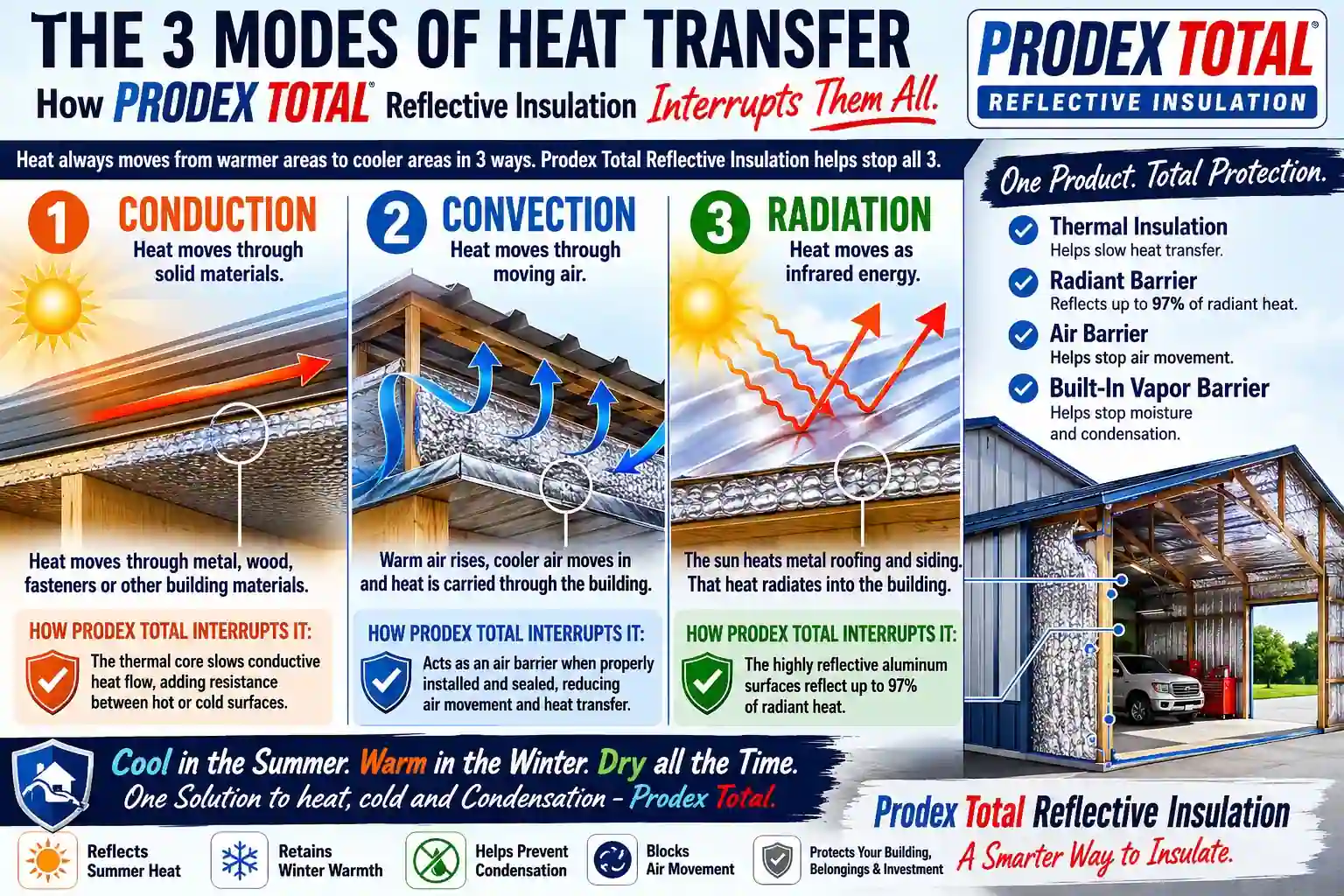
Heat moves three different ways:
Conduction
Conduction transfers heat through direct contact between materials.
Convection
Convection transfers heat through moving air.
Radiation
Radiant heat travels as infrared energy from warmer surfaces toward cooler surfaces.
Traditional fiberglass primarily slows conductive heat transfer.
Reflective insulation addresses all three methods by combining a thermal core with highly reflective foil surfaces that can reflect up to 97% of radiant heat when properly installed with an adjacent air space.
Why Reflective Insulation Performs Differently Than Fiberglass
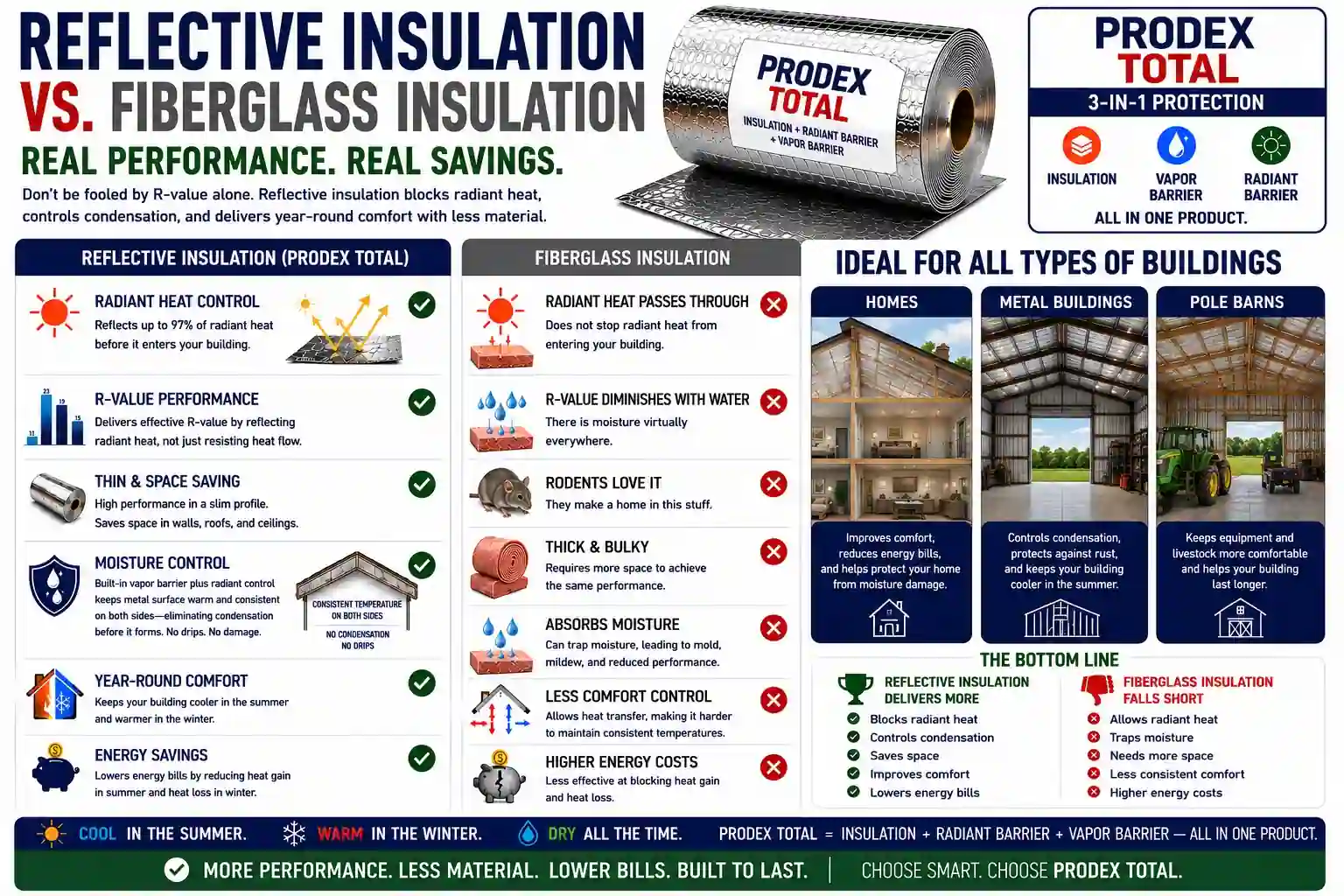
Many people attempt to compare reflective insulation directly to fiberglass using only thickness or labeled R-value. Unfortunately, that comparison ignores how the two products work. Fiberglass depends on trapped air pockets remaining dry and undisturbed. Reflective insulation reduces radiant heat transfer, limits air movement and provides an integrated vapor barrier, allowing one product to perform multiple functions simultaneously. This is why many builders prefer reflective insulation in metal buildings where radiant heat and condensation are major concerns.
Why Builders Choose Reflective Insulation Instead of Fiberglass
Choosing insulation involves more than comparing R-values. Builders, contractors and property owners want insulation systems that improve energy efficiency, control condensation, simplify installation and deliver reliable long-term performance.
While fiberglass insulation has been used for decades, reflective insulation takes a more complete approach. Prodex Total reflective insulation combines thermal insulation, a radiant barrier, an air barrier and a built-in vapor barrier into one product. This all-in-one design makes reflective insulation especially effective for metal buildings, pole barns, homes, garages, workshops, shipping containers, barndominiums and Quonset huts, where controlling heat, cold and condensation is critical.
The comparison below highlights some of the most important differences between reflective insulation and fiberglass insulation.
Reflective Insulation vs. Fiberglass Comparison
| Performance Characteristic | Prodex Total Reflective Insulation | Fiberglass Insulation |
|---|---|---|
| Primary Method of Insulation | Reflects radiant heat while reducing conductive and convective heat transfer | Primarily slows conductive heat transfer |
| How It Works | Combines thermal insulation, radiant barrier, air barrier and vapor barrier into one product | Slows heat transfer by trapping air within glass fibers |
| Published R-Value | Assembly R-value varies by application and air space | Material R-value based primarily on thickness |
| Radiant Heat Performance | Reflects up to 97% of radiant heat when properly installed | Does not reflect radiant heat |
| Thermal Insulation | ✓ Yes | ✓ Yes |
| Air Barrier | ✓ Built into the product when seams are properly sealed | Usually requires a separate air barrier |
| Built-In Vapor Barrier | ✓ Included | Usually requires a separate vapor barrier |
| Condensation Control | Excellent. Helps reduce condensation by limiting radiant heat transfer and moisture migration. | Limited. Additional vapor control measures are often required in condensation-prone buildings. |
| Moisture Absorption | Closed-cell core resists moisture absorption | Performance can decline if insulation becomes wet |
| Mold & Mildew Resistance | Closed-cell construction does not support mold growth and helps reduce moisture conditions that promote mold. | Glass fibers themselves do not support mold, but moisture trapped within assemblies can contribute to mold growth on surrounding building materials. |
| Summer Heat Reduction | Excellent | Moderate |
| Winter Heat Retention | Excellent | Good |
| Energy Efficiency | Helps reduce radiant heat gain, conductive heat transfer and unwanted air leakage | Primarily reduces conductive heat transfer |
| Air Leakage Control | Excellent when seams are properly sealed | Requires separate air sealing products |
| Installation | Lightweight rolls install quickly with mechanical fasteners | Batts or rolls require cutting, fitting and careful placement |
| Products Required | One product performs multiple functions | Often requires multiple insulation components |
| Thickness Required | Thin profile maximizes usable interior space | Greater thickness required for higher R-values |
| Weight | Lightweight | Heavier |
| Durability | Reinforced foil facings with closed-cell foam core resist compression and moisture | Can compress, tear or lose loft if damaged or improperly installed |
| Maintenance | Little to no maintenance under normal conditions | Wet or damaged insulation may require replacement |
| Rodent Nesting | Closed-cell construction does not provide fibrous nesting material | Fibrous insulation may be used by rodents as nesting material if they gain access to the building |
| Settling or Sagging | Will not settle or lose loft | May sag or lose effectiveness if improperly installed or exposed to moisture |
| Life Expectancy | Long service life when properly installed | Long service life when kept dry and properly maintained |
| Best Applications | Metal buildings, pole barns, shipping containers, barndominiums, Quonset huts, garages, warehouses and homes | Residential walls, ceilings and attics where radiant heat and condensation are less significant concerns |
Why Prodex Total Reflective Insulation Is an All-in-One System
Many fiberglass insulation systems require several separate products to achieve the same overall building performance. In contrast, Prodex Total reflective insulation combines multiple building envelope functions into one lightweight, durable and easy-to-install product.
| Building System Function | Prodex Total Reflective Insulation | Typical Fiberglass System |
|---|---|---|
| Thermal Insulation | ✓ Included | ✓ Included |
| Radiant Barrier | ✓ Included | Usually separate |
| Air Barrier | ✓ Included | Usually separate |
| Built-In Vapor Barrier | ✓ Included | Usually separate |
| Condensation Control | ✓ Included | Additional products often required |
| Number of Products Required | 1 Product | Often 3–4 Products |
Instead of purchasing thermal insulation, a separate radiant barrier, an air barrier and a vapor barrier, Prodex Total reflective insulation combines all four functions into one system. This simplifies installation while helping create buildings that are more comfortable, energy efficient and dry throughout the year.
Cool in the Summer. Warm in the Winter. Dry all the Time. One Solution to heat, cold and Condensation – Prodex Total.
Understanding Reflective Insulation R-Value
Many consumers ask:
"What is the R-value of reflective insulation?"
The answer is more complex than with traditional insulation because reflective insulation is evaluated differently.
Traditional insulation is measured primarily by conductive resistance.
Reflective insulation performance includes:
• Radiant heat reduction
• Air barrier performance
• Vapor barrier performance
• Thermal resistance
This is why reflective insulation systems are tested using assemblies rather than simply measuring the insulation material itself.
Reflective Insulation vs Spray Foam
Both reflective insulation and spray foam can improve a building's energy efficiency, but they work very differently and are often chosen for different reasons. Understanding the strengths and limitations of each system can help you determine which insulation is the better fit for your project.
For a more complete explanation of spray foam insulation, including open-cell and closed-cell foam, R-value, costs, DIY spray foam kits, installation concerns, moisture performance, common problems, and comparisons with other insulation systems, read our comprehensive Spray Foam Insulation Guide.
Installation
Spray foam insulation is applied as a liquid that expands and hardens after application. Proper installation requires specialized spraying equipment, trained installers and protective gear. Because the foam permanently adheres to surfaces, mistakes are difficult and often expensive to correct.
Reflective insulation, such as Prodex Total, is supplied in rolls that are fastened to framing members using screws, staples or other approved fasteners. It requires no specialized spraying equipment, creates very little job-site mess and is often installed by contractors or experienced do-it-yourself homeowners. Since it is installed in sheets, repairs or future modifications are typically much easier.
Cost
Spray foam generally has one of the highest installation costs of any insulation system due to the material, specialized equipment and professional labor required. While it can provide excellent thermal performance, the initial investment is often significantly higher than many other insulation options.
Reflective insulation typically offers a lower installed cost while combining multiple functions into one product, including thermal insulation, a radiant barrier, an air barrier and a built-in vapor barrier. Eliminating the need for several separate products can reduce both material and labor costs on many projects.
Moisture and Condensation
One of the biggest advantages of reflective insulation is its ability to help control condensation. Quality reflective insulation includes a Class 1 vapor barrier that helps prevent moisture from reaching cooler surfaces where condensation can form. This is especially valuable in metal buildings, where condensation can lead to dripping water, rust, mold and mildew.
Spray foam can also reduce air movement and moisture infiltration when properly installed, but moisture management depends on the type of foam used, installation quality and overall building design. In metal structures, additional vapor management details may still be necessary depending on the application.
Repairs and Future Modifications
Once cured, spray foam becomes permanently bonded to the building. Remodeling, adding electrical wiring, replacing damaged panels or making structural modifications often requires cutting away hardened foam and reinstalling insulation afterward.
Reflective insulation remains accessible and is generally much easier to remove, repair or reinstall if future building modifications become necessary.
Off-Gassing
During installation, spray foam products can release fumes while the chemicals react and cure. Manufacturers typically recommend that occupants avoid the area until the curing process is complete and adequate ventilation has been provided.
Reflective insulation requires no chemical mixing during installation and does not rely on expanding chemical reactions, making installation simpler and cleaner.
Longevity
When properly installed and protected, both insulation systems can provide many years of service. Reflective insulation does not settle, compress or absorb moisture like some traditional insulation materials, helping it maintain consistent performance over time. Its foil surfaces and closed-cell core also resist mold and mildew growth when kept properly installed.
Best Choice for Metal Buildings
Metal buildings present unique insulation challenges because they are exposed to intense solar heat, rapid nighttime cooling and frequent condensation. While spray foam can provide thermal insulation, reflective insulation offers additional advantages by combining thermal insulation, a radiant barrier, air barrier and built-in vapor barrier into a single system. This helps reduce radiant heat gain during summer, slows heat loss during winter and helps prevent condensation from forming on metal panels.
For many owners of metal buildings, pole barns, workshops, warehouses and agricultural buildings, reflective insulation provides an effective all-in-one solution that is easier to install, simpler to repair and well suited to the demands of steel construction.
Cool in the Summer. Warm in the Winter. Dry all the Time. One Solution to heat, cold and Condensation – Prodex Total.
Reflective Insulation vs Mineral Wool
Mineral wool is a dense insulation material made from rock, slag or other mineral fibers. It is commonly used because it offers thermal resistance, sound absorption and fire resistance. Reflective insulation works differently. Instead of relying primarily on thick fiber density, reflective insulation uses highly reflective foil surfaces and a closed-cell core to reduce radiant heat transfer while also helping control air movement and moisture.
Installation
Mineral wool is typically installed as batts or boards between framing members. It can be heavier and more rigid than fiberglass, which may make installation slower in some buildings. It also usually requires careful cutting and fitting around framing, wiring and irregular spaces.
Reflective insulation such as Prodex Total is supplied in lightweight rolls that can be fastened over or between framing members. In many metal buildings, pole barns, garages and agricultural buildings, reflective insulation is easier to handle, faster to install and less labor-intensive than dense batt or board materials.
Moisture and Condensation
Mineral wool is often promoted as moisture-resistant because it does not absorb water as easily as fiberglass. However, mineral wool is not a complete vapor barrier by itself. In buildings where condensation is a major concern, additional vapor control may still be required.
Reflective insulation provides a major advantage in this area because Prodex Total includes a built-in vapor barrier. This helps prevent warm, moist air from reaching cooler metal surfaces where condensation can form. In steel buildings, that can mean fewer problems with dripping water, rust, mold, mildew and damaged contents.
Radiant Heat
Mineral wool slows conductive heat transfer, but it does not reflect radiant heat the way reflective insulation does. This matters in metal buildings and other structures exposed to strong sun. Metal roofing and siding can absorb intense solar heat and radiate that heat into the building.
Reflective insulation helps reduce this radiant heat gain by reflecting radiant energy away from the occupied space. That makes it especially useful in hot climates, open-span buildings, workshops, warehouses, barns and other structures where summer heat is a major problem.
Cost and System Complexity
Mineral wool may require additional products to achieve the same complete system benefits: insulation, vapor control, air sealing and radiant heat reduction. Reflective insulation combines these functions into one product.
For many projects, that means fewer materials, fewer installation steps and a simpler overall insulation system.
Best Choice for Metal Buildings
Mineral wool can be useful where fire resistance or sound absorption are the primary goals. However, for metal buildings where heat, cold and condensation are the main concerns, reflective insulation often provides a more complete solution.
Prodex Total = insulation + radiant barrier + vapor barrier — all in one product.
Cool in the Summer. Warm in the Winter. Dry all the Time. One Solution to heat, cold and Condensation – Prodex Total.
Reflective Insulation vs. Foam Board
Reflective insulation and foam board insulation are both highly effective building insulation products, but they work in fundamentally different ways.
Foam board insulation primarily slows conductive heat transfer by using rigid foam panels with a high R-value per inch. It is commonly installed in walls, roofs, foundations, and continuous exterior insulation systems where space is limited and maximizing conductive insulation is a priority.
Reflective insulation, on the other hand, combines thermal insulation with a highly reflective surface that helps reduce radiant heat transfer. When installed with the proper adjacent air space, it reflects up to 97% of radiant heat, making it especially effective in buildings with large roof areas exposed to direct sunlight. Many reflective insulation systems also function as an air barrier, built-in Class 1 vapor barrier, and condensation control layer, reducing the need for multiple building envelope products.
Which Insulation Is Best?
Neither insulation system is universally better. The right choice depends on your building, climate, and performance goals.
Foam board insulation is often an excellent choice for:
- Continuous exterior insulation
- Foundation walls
- Basement walls
- Below-grade applications
- Projects where high R-value per inch is the primary objective
Reflective insulation is often preferred for:
- Metal buildings
- Pole barns
- Barndominiums
- Shipping containers
- Garages and workshops
- Agricultural buildings
- Roof systems where radiant heat gain and condensation are major concerns
If you're considering rigid foam insulation for your next project, our comprehensive Foam Board Insulation Guide explains the different types of foam board, their advantages and limitations, common applications, installation considerations, and how they compare with reflective insulation to help you choose the best solution for your building.
Reflective Insulation vs Cellulose
Cellulose insulation is one of the most widely used loose-fill insulation materials for attics and wall cavities. It is manufactured primarily from recycled paper fibers that are treated with fire-retardant chemicals. While cellulose provides good thermal resistance in enclosed wall and attic cavities, reflective insulation works differently by reducing radiant heat transfer while also serving as an air barrier and built-in vapor barrier.
Installation
Cellulose is typically installed by blowing loose fibers into attic spaces or wall cavities using specialized equipment. Proper installation is important because insufficient density or uneven application can reduce performance. Over time, some cellulose installations may settle, particularly in wall cavities, which can leave uninsulated gaps.
Reflective insulation, such as Prodex Total, is installed in lightweight rolls that are mechanically fastened to framing members. It requires no blowing equipment and is commonly used in metal buildings, pole barns, garages, shipping containers, barndominiums and homes. Because it remains in sheet form, its thickness and coverage stay consistent after installation.
Moisture and Condensation
One of the primary differences between cellulose and reflective insulation is moisture management. Although cellulose is treated to resist mold and pests, it remains a fiber-based insulation material. If exposed to prolonged moisture or roof leaks, its thermal performance may decline, and wet insulation often requires removal and replacement.
Reflective insulation includes a Class 1 vapor barrier that helps prevent moisture from reaching cooler building surfaces where condensation forms. This makes it particularly valuable in metal buildings, where condensation can lead to dripping water, corrosion, mold, mildew and damage to stored equipment or inventory.
Radiant Heat Performance
Cellulose slows conductive heat transfer but does little to reduce radiant heat. In buildings with metal roofs or walls, radiant heat from the sun can become a significant source of unwanted indoor heat.
Reflective insulation addresses this challenge by reflecting up to 97% of radiant heat when installed with the proper adjacent air space. This helps reduce summer heat gain while also improving year-round energy efficiency.
Maintenance and Longevity
Cellulose insulation may require additional attention if it becomes wet or settles over time. Reflective insulation does not settle, compress or absorb moisture under normal conditions, helping it maintain consistent performance throughout its service life.
Best Choice for Metal Buildings
Cellulose performs well in enclosed attic and wall assemblies, but it is generally not the preferred insulation for exposed steel structures where radiant heat and condensation are major concerns. Reflective insulation combines thermal insulation, a radiant barrier, an air barrier and a built-in vapor barrier into one product, making it especially effective for metal buildings, pole barns, warehouses, workshops and agricultural buildings.
Prodex Total = Insulation + Radiant Barrier + Vapor Barrier — All in One Product.
Cool in the Summer. Warm in the Winter. Dry all the Time. One Solution to heat, cold and Condensation – Prodex Total.
Benefits of Reflective Insulation
Helps Reduce Summer Heat Gain
Helps Retain Winter Heat
Controls Condensation
Creates an Air Barrier
Includes a Built-in Vapor Barrier
Helps Reduce Energy Costs
Lightweight Installation
Long Service Life
Best Applications for Reflective Insulation
Reflective insulation is one of the most versatile insulation systems available because it helps solve three of the biggest building performance challenges: heat, cold and condensation. Unlike traditional insulation materials that perform only one primary function, reflective insulation combines thermal insulation, a radiant barrier, an air barrier and a built-in vapor barrier into one product.
Whether you're insulating a metal building, pole barn, home or shipping container, reflective insulation helps create a more comfortable, energy-efficient and drier building.
Reflective Insulation for Metal Buildings
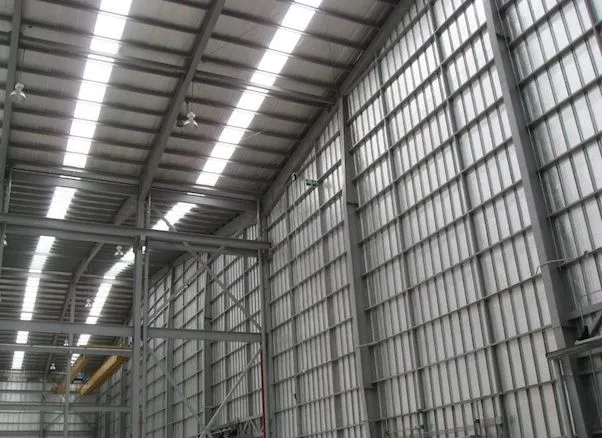
Metal buildings experience some of the most extreme temperature swings of any structure. Steel roofing and siding absorb intense solar heat during summer and quickly cool during colder weather, creating ideal conditions for condensation.
Reflective insulation helps solve both problems by reflecting radiant heat away from the building while reducing heat loss during winter. Just as importantly, reflective insulation includes a built-in vapor barrier that helps prevent condensation from forming on the underside of metal panels, reducing the risk of rust, mold, mildew and water damage.
Because Prodex Total reflective insulation combines thermal insulation, a radiant barrier, an air barrier and a vapor barrier into one product, installation is often simpler than systems requiring multiple separate materials.
Learn more about reflective insulation for metal buildings.
Reflective Insulation for Warehouses
Warehouses often have enormous metal roof and wall surfaces exposed to direct sunlight, making radiant heat gain a significant concern during warmer months. During colder weather, large steel surfaces can also create conditions for condensation when warm, humid interior air contacts cooler metal panels.
Reflective insulation can help address these problems by reducing radiant heat transfer, slowing heat loss, limiting air movement, and helping control condensation. These benefits can improve working conditions, reduce heating and cooling demands, and help protect inventory, equipment, and other stored materials.
For a complete look at insulation systems for large commercial and industrial buildings, see our warehouse insulation guide.
Reflective Insulation for Pole Barns
Pole barns are commonly used for livestock, equipment storage, workshops and agricultural operations where temperature control and moisture protection are essential. Uninsulated metal roofs frequently produce condensation that can drip onto machinery, hay, feed and valuable equipment.
Reflective insulation helps keep pole barns cooler during summer, warmer during winter and significantly drier throughout the year. By reducing radiant heat transfer while also acting as an air barrier and built-in vapor barrier, reflective insulation helps control the heat, cold and condensation that often affect agricultural buildings.
Prodex Total reflective insulation combines these benefits into one lightweight product, simplifying installation while reducing the need for multiple insulation components.
Learn more about reflective insulation for pole barns.
Reflective Insulation for Homes
Reflective insulation is an excellent choice for residential construction and remodeling projects, especially in homes exposed to strong sunlight or significant seasonal temperature changes. Reflective insulation can be installed in ceilings, attics, walls, crawl spaces, floors, garages and additions to improve year-round comfort.
Unlike many traditional insulation systems, reflective insulation also serves as a continuous air barrier and built-in vapor barrier, helping reduce unwanted air leakage and moisture migration. This allows reflective insulation to address heat, cold and condensation while improving overall energy efficiency.
Prodex Total reflective insulation offers homeowners an all-in-one insulation solution that simplifies installation while delivering long-lasting performance.
Learn more about reflective insulation for homes.
Since the roof is the largest source of heat gain during summer months and heat loss during winter, selecting the right roof insulation is one of the most important decisions for improving a home's energy efficiency and comfort. Our Roof Insulation Guide compares reflective insulation, fiberglass, spray foam, and other insulation systems to help you choose the best solution for your home and climate.
Reflective Insulation for Shipping Containers
Steel shipping containers are extremely susceptible to both radiant heat gain and condensation because metal transfers heat rapidly. Without reflective insulation, container interiors can become extremely hot during the day while developing heavy condensation as temperatures change.
Reflective insulation helps maintain more comfortable interior temperatures by reflecting radiant heat while also providing thermal insulation, an air barrier and a built-in vapor barrier. This allows reflective insulation to keep shipping containers cooler during summer, warmer during winter and much drier throughout the year.
Whether used as storage units, container homes, workshops or offices, Prodex Total reflective insulation provides an efficient all-in-one insulation solution.
Learn more about reflective insulation for shipping containers.
Reflective Insulation for Barndominiums
Barndominiums combine residential living with steel building construction, creating unique insulation requirements. Owners want comfortable living spaces while preventing the condensation issues often associated with metal structures.
Reflective insulation helps achieve both goals by reducing radiant heat during summer, slowing heat loss during winter and controlling condensation with its built-in vapor barrier. Because reflective insulation performs multiple functions simultaneously, it simplifies the insulation system while improving year-round comfort.
Prodex Total reflective insulation is lightweight, durable and well suited for both new barndominium construction and remodeling projects.
Learn more about reflective insulation for barndominiums.
Reflective Insulation for Quonset Huts
Quonset huts feature large curved steel surfaces that readily absorb solar heat and frequently experience condensation when warm interior air contacts cooler metal panels.
Reflective insulation conforms easily to curved steel buildings while reducing radiant heat transfer and helping control condensation. Installed beneath the metal skin, reflective insulation creates a continuous insulation system that helps maintain more stable indoor temperatures throughout the year.
Because Prodex Total reflective insulation combines thermal insulation, radiant protection and moisture control into one product, it is an ideal solution for Quonset homes, workshops, aircraft hangars, storage buildings and agricultural facilities.
Complete Quonset Hut Insulation Guide
Choosing the right reflective insulation is only part of creating a comfortable, energy-efficient Quonset hut. Understanding how heat moves through curved steel buildings, why condensation forms, and how different insulation systems compare will help you achieve the best long-term results.
For a complete walkthrough, read our Ultimate Quonset Hut Insulation Guide: Installation, Condensation Control & Energy Savings. It explains how reflective insulation compares with fiberglass and spray foam, how to prevent condensation, improve year-round energy efficiency, and properly install insulation in Quonset homes, workshops, agricultural buildings, storage facilities, and aircraft hangars.
Reflective Insulation for Garages and Workshops
Garages and workshops are often among the least insulated spaces on a property, making them uncomfortable during both hot and cold weather. Metal garages are especially vulnerable to radiant heat gain during summer and condensation during cooler weather.
Reflective insulation helps create a more comfortable garage or workshop by reducing summer heat, slowing winter heat loss and helping prevent condensation on metal walls and roofing. Because reflective insulation also functions as an air barrier and built-in vapor barrier, it helps protect tools, equipment, vehicles and stored materials from moisture-related damage.
Whether used for woodworking, automotive work, hobbies or general storage, Prodex Total Reflective Insulation Plus provides and efficient all-in-one insulation solution that addresses heat, cold and condensation while remaining lightweight, durable and easy to install. For product comparisons, installation methods, and expert recommendations, read our Metal Garage & Workshop Insulation Guide.
Cool in the Summer. Warm in the Winter. Dry all the Time. One Solution to heat, cold and Condensation – Prodex Total.
Why Condensation Matters More Than Many People Realize
Condensation is one of the most underestimated problems in metal buildings, pole barns, garages, shipping containers, barndominiums and Quonset huts. Many people focus only on temperature control, but moisture can be just as damaging as heat and cold. When warm, moist air contacts a cooler metal surface, water droplets can form on the underside of roofing, siding and framing.
That moisture can create serious long-term problems.
Condensation Can Cause Rust and Corrosion
Metal buildings are durable, but repeated moisture exposure can shorten their service life. Condensation on roof panels, wall panels, fasteners and framing can contribute to rust, corrosion and premature deterioration. Over time, this can weaken components, stain surfaces and create costly maintenance issues.
Condensation Can Lead to Mold and Mildew
Moisture trapped inside a building can encourage mold and mildew growth, especially when condensation wets wood framing, stored materials, cardboard, fabric, insulation or other organic surfaces. Mold and mildew can create odors, damage property and make the building less comfortable to use.
Wet Insulation Loses Performance
Traditional fiber insulation can lose effectiveness when it becomes wet. Moisture can compress or mat down insulation fibers, reduce thermal performance and create conditions where mold and mildew may develop. In many cases, wet insulation must be removed and replaced.
Reflective insulation helps avoid this problem because Prodex Total reflective insulation includes a closed-cell core and built-in vapor barrier that does not absorb moisture like fiber-based insulation materials.
Condensation Can Damage the Building Structure
Condensation is not just a surface problem. Repeated moisture exposure can affect purlins, girts, fasteners, wood framing, roof decks, wall panels and stored contents. In agricultural buildings, workshops and warehouses, condensation can damage tools, machinery, inventory, feed, hay and equipment.
Stopping condensation helps protect both the building and everything inside it.
Condensation Can Affect Indoor Air Quality
A damp building is often an uncomfortable building. Excess moisture can contribute to musty odors, mold growth and poor indoor air quality. For homes, barndominiums, workshops and occupied buildings, controlling condensation is an important part of creating a cleaner, drier and healthier interior environment.
Why Vapor Barriers Alone Are Often Not Enough
A vapor barrier can help block moisture movement, but vapor control alone does not solve every condensation problem. Condensation is caused by a combination of moisture, temperature difference and surface contact. If warm interior air reaches a cold metal surface, condensation can still occur when that surface is below the dew point.
That is why the insulation system must do more than simply block vapor. It should also reduce heat transfer, limit air movement and help keep interior surfaces closer to the surrounding air temperature.
How Reflective Insulation Helps Stop Condensation
Reflective insulation helps control condensation because it addresses multiple causes at the same time. It reflects radiant heat, reduces conductive heat transfer, limits air movement and provides a built-in vapor barrier.
In metal buildings, this is especially important. Reflective insulation helps maintain more similar temperatures on each side of the metal sheeting, reducing the temperature difference that causes warm, moist air to condense on cold steel. By helping separate warm interior air from cold metal surfaces, reflective insulation reduces dripping water, rust, mold, mildew and moisture damage.
This is one reason reflective insulation is so effective in steel buildings, pole barns, garages, workshops, shipping containers and agricultural buildings where condensation is a constant concern.
For a deeper explanation, read our guide on how to stop condensation in metal buildings and our related pole barn insulation and condensation control guide.
Cool in the Summer. Warm in the Winter. Dry all the Time. One Solution to heat, cold and Condensation – Prodex Total.
Ready to Buy the Best Reflective Insulation?
Now that you've learned how reflective insulation works, how it compares with fiberglass, spray foam, mineral wool and cellulose, and why it helps control heat, cold and condensation, you're ready to choose the best reflective insulation for your project.
Whether you're insulating a metal building, pole barn, home, garage, workshop, shipping container, barndominiumor Quonset hut, Prodex Total Reflective Insulation combines:
Thermal Insulation
Radiant Barrier
Air Barrier
Built-In Vapor Barrier
All in One Product.
Before ordering, determine how much insulation your project will require. Our How Much Insulation Do I Need? guide explains how to calculate insulation requirements for roofs, walls, ceilings, metal buildings, pole barns, homes, and other structures.
Shop Reflective Insulation by Building Type
Find insulation solutions designed specifically for your project:
Shop Reflective Insulation Products
Ready to compare products and choose the right insulation?
Visit our Reflective Insulation for Sale page to browse the complete line of Prodex Total Reflective Insulation, compare available products and find the best reflective insulation for your application.
Our most popular products include:
10M Prodex Total Insulation Plus – Our highest-performing reflective insulation for maximum year-round comfort, energy efficiency and condensation control.
Complete Reflective Insulation Product Line – Compare all Prodex Total reflective insulation products, including multiple widths, finishes and specialty rolls, to find the ideal solution for your project.
Cool in the Summer. Warm in the Winter. Dry all the Time.
One Solution to Heat, Cold and Condensation – Prodex Total Reflective Insulation.
Frequently Asked Questions About Reflective Insulation
What is reflective insulation?
Reflective insulation is an insulation system that uses highly reflective foil surfaces and a thermal core to reduce radiant heat transfer while also slowing conductive and convective heat flow. Unlike many traditional insulation materials, quality reflective insulation also functions as an air barrier and built-in vapor barrier, making it an effective solution for metal buildings, homes, pole barns, shipping containers and many other structures.
Does reflective insulation really work?
Yes. Reflective insulation has been used successfully for decades in residential, commercial, agricultural and industrial buildings. When properly installed with the recommended air space, reflective insulation can reflect up to 97% of radiant heat while also helping reduce heat loss, control condensation and improve energy efficiency.
Does reflective insulation have an R-value?
Yes. Reflective insulation has an R-value, but it is measured differently than traditional fiber insulation. Because reflective insulation reduces radiant heat transfer while also acting as an air barrier and vapor barrier, its performance is evaluated as part of a complete building assembly rather than simply measuring the insulation material alone.
Is reflective insulation better than fiberglass?
It depends on the application. Fiberglass primarily slows conductive heat transfer, while reflective insulation also addresses radiant heat, air leakage and moisture. For metal buildings, pole barns and other steel structures where condensation and radiant heat are major concerns, reflective insulation often provides additional advantages.
Does reflective insulation stop condensation?
Reflective insulation is one of the most effective ways to help control condensation in metal buildings. By reducing heat transfer and helping maintain more similar temperatures on each side of the metal sheeting, reflective insulation minimizes the conditions that allow condensation to form. Its built-in vapor barrier also helps prevent moisture from reaching cold surfaces.
Does reflective insulation need an air gap?
Yes. Most reflective insulation systems perform best when installed adjacent to an air space. The air gap allows the reflective surface to reduce radiant heat transfer effectively. Installation recommendations vary depending on the application, so always follow the manufacturer's installation guidelines.
Can reflective insulation be installed in walls?
Yes. Reflective insulation is commonly installed in residential and commercial walls, especially where moisture control and radiant heat reduction are important. It can also serve as an air barrier and vapor barrier while helping improve overall thermal performance.
Can reflective insulation be installed under a roof?
Yes. One of the most common applications for reflective insulation is beneath metal roofing. Installing reflective insulation under the roof helps reduce radiant heat gain, slow heat loss during winter and control condensation on the underside of the roof panels.
Can reflective insulation replace fiberglass?
In many applications, yes. Reflective insulation combines thermal insulation, a radiant barrier, an air barrier and a vapor barrier into one product. Depending on your building design and local energy code requirements, reflective insulation may replace fiberglass or be used together with fiberglass for additional thermal performance.
Is reflective insulation waterproof?
Quality reflective insulation does not absorb water like fiber-based insulation. Products such as Prodex Total feature a closed-cell core and built-in vapor barrier that resist moisture while helping prevent condensation from reaching the building interior.
Can reflective insulation mold or mildew?
Reflective insulation itself does not provide a food source for mold or mildew. Because it resists moisture absorption and helps control condensation, it can also reduce conditions that encourage mold growth elsewhere within the building.
Does reflective insulation reduce energy bills?
Many building owners report lower heating and cooling costs after installing reflective insulation. By reducing radiant heat gain during summer, slowing heat loss during winter and minimizing unwanted air leakage, reflective insulation can help improve overall energy efficiency.
Can reflective insulation be installed over existing insulation?
Yes. In many retrofit applications, reflective insulation can be installed over existing insulation to improve radiant heat performance and create a continuous air and vapor barrier. The best installation method depends on the building type and the condition of the existing insulation.
What is the best reflective insulation for metal buildings?
For metal buildings, the best reflective insulation should provide thermal insulation, radiant heat protection, air sealing and vapor control in one system. Products such as Prodex Total are specifically designed to address the unique challenges of steel buildings, including heat, cold and condensation.
What is the difference between reflective insulation and a radiant barrier?
A radiant barrier is designed primarily to reflect radiant heat. Reflective insulation combines a radiant barrier with a thermal core, allowing it to reduce radiant, conductive and convective heat transfer while also functioning as an air barrier and vapor barrier.
Is reflective insulation good for pole barns?
Yes. Reflective insulation is widely used in pole barns because it helps control summer heat, winter heat loss and condensation beneath metal roofing. It also protects equipment, livestock feed and stored materials from moisture-related damage.
Can reflective insulation be used in shipping containers?
Yes. Reflective insulation is one of the most popular insulation choices for shipping containers because it addresses the two biggest challenges of steel containers: extreme heat gain and condensation. It also helps preserve valuable interior space because it is much thinner than many traditional insulation systems.
How long does reflective insulation last?
When properly installed and protected from physical damage, quality reflective insulation can provide decades of reliable performance. Unlike loose-fill or batt insulation, reflective insulation does not settle, sag or absorb moisture under normal conditions.
Where is reflective insulation most commonly used?
Reflective insulation is commonly installed in metal buildings, pole barns, homes, garages, workshops, barndominiums, shipping containers, Quonset huts, RVs, vans, warehouses and agricultural buildings. It is especially valuable wherever radiant heat, heat loss and condensation are major concerns.
Why do builders choose Prodex Total reflective insulation?
Builders choose Prodex Total reflective insulation because it combines thermal insulation, a radiant barrier, an air barrier and a built-in vapor barrier into one product. This all-in-one design simplifies installation while helping keep buildings Cool in the Summer. Warm in the Winter. Dry all the Time. One Solution to heat, cold and Condensation – Prodex Total.
Cool in the Summer. Warm in the Winter. Dry all the Time. One Solution to heat, cold and Condensation - Prodex Total.
Buy Prodex Total Reflective Insulation with Confidence
- Independent Prodex Insulation Reviews at Smart Customer. Smart Customer is the leading community of online business reviewers. The community helps consumers find great online business and avoid scams. The community has grown to over 850,000 members and has reviewed over 58,000 online businesses.
- BBB report. For over 100 years, BBB has set the standard for ethical business behavior. We're proud to maintain an "A to A+" rating. This rating takes into account a company's size in its relation to complaints. We're proud to maintain an "A to A+" rating. Accredited since March 15, 2004.
- ICC-ES Recognized - ICC-ES is an evaluation service that takes independent test data for a variety of products and analyses it against a uniform Acceptance Criteria that is recognized internationally.
Prodex adds an extra layer of credibly by submitting these rolls to the ASTM Rima International verification program. By having a third party verification, Prodex assures its clients that the insulation complies with industry standards, and is suitable for any construction system.
- Over 5 billion square feet sold
Insulation4Less is the only location in the USA and Canada where you can buy Prodex Total Insulation. BEWARE of sellers using Prodex product images, descriptions and test results to market other products.
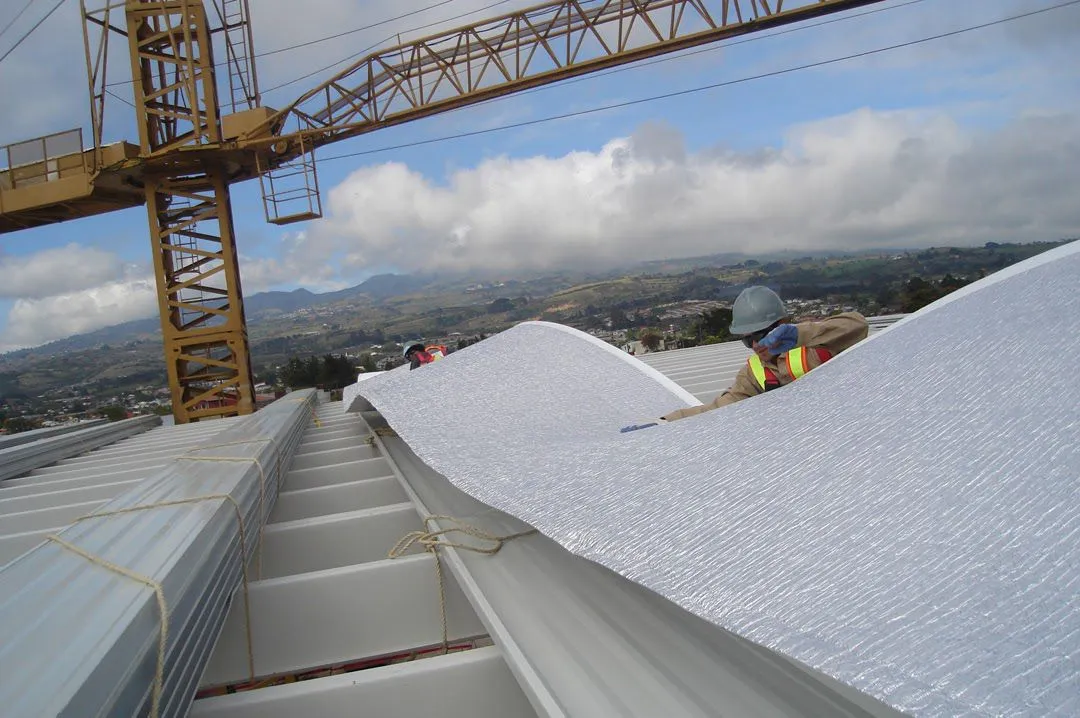
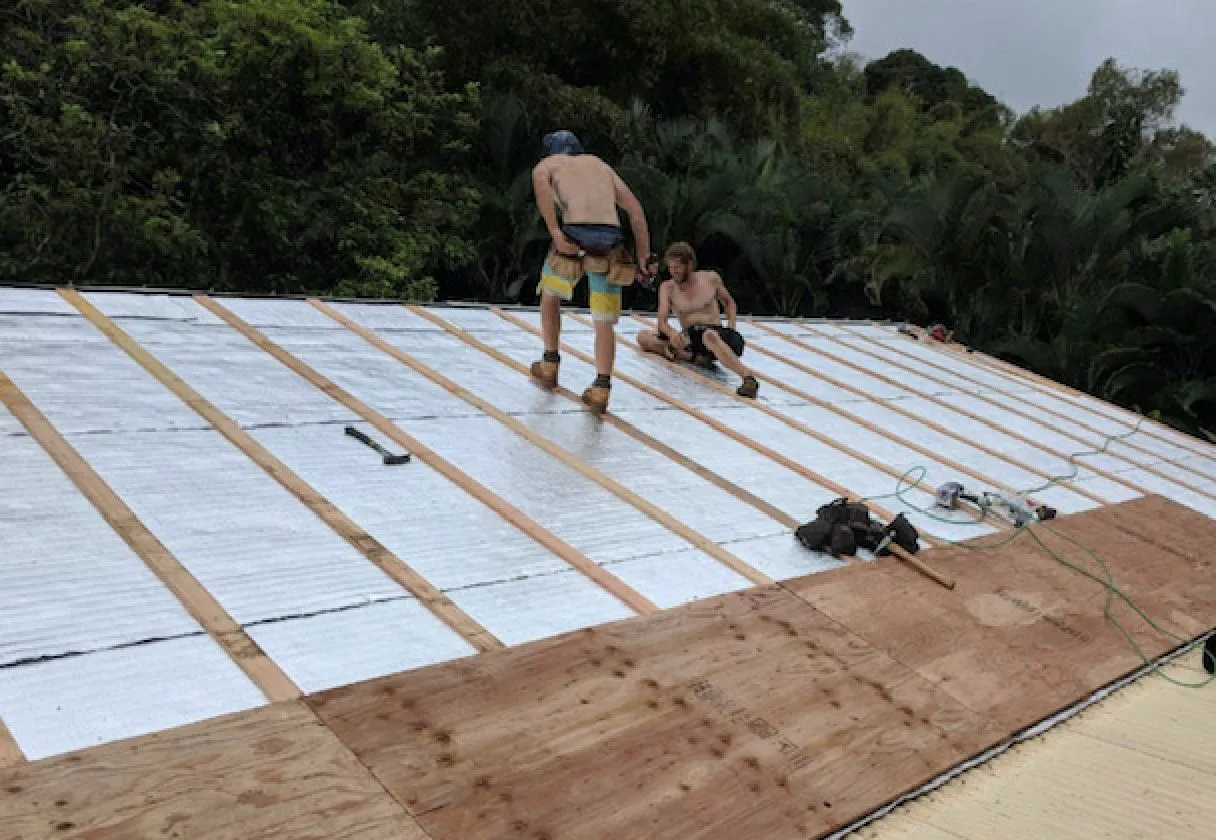
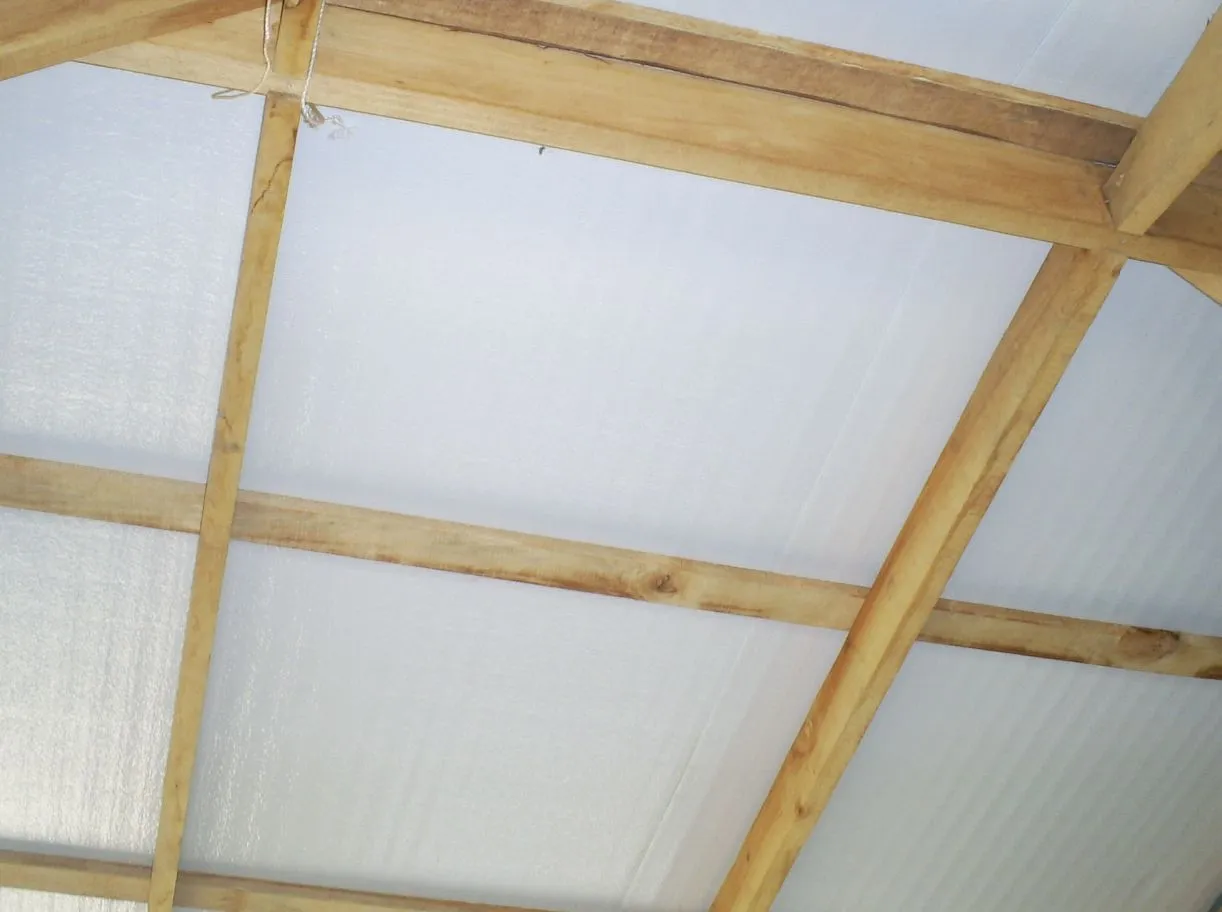
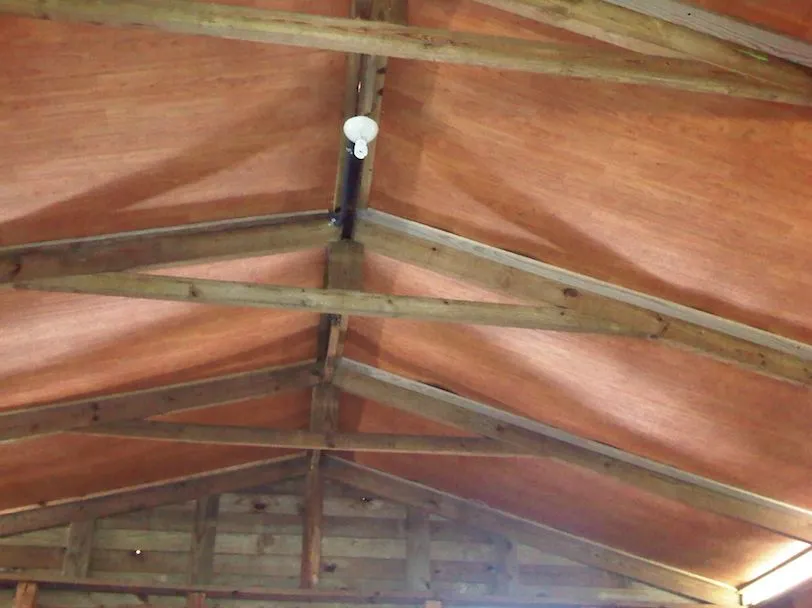
Prodex Difference: ICC-ES Recognized : R-Value unaffected by humidity : Prevents condensation : Prevents 97% of radiant heat transfer : Vapor barrier : Elastic : Does not promote mold or mildew : Does not provide for nesting of rodents, bugs or birds : Seals around nails (no leak) : Keeps its shape over time (doesn't collapse) : Rippled surface increases airflow : Over 5 billion square feet sold.
Cool In Summer - Warm In Winter - Dry All the Time
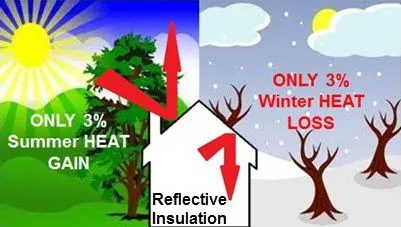
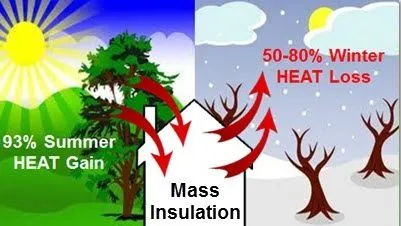
INSULATION + Radiant Barrier + Vapor
Barrier + Air Barrier
ALL IN ONE PRODUCT!
Dear Insulation4Less,
I insulated a 40 year old steel building which had minimum 3 inch fiberglass under the steel. It is a difficult retro fit - this product worked well, easy, and gained at least six inches of dead air insulation. How well the reflective component works is hard to tell, but the light reflection inside is a great added benefit. The coldest part of the winter was over before I insulated. Still, the difference in the comfort and fuel use is dramatic.
Phil B. Wilson, WY