How to Insulate a Metal Building (Step-by-Step Guide)


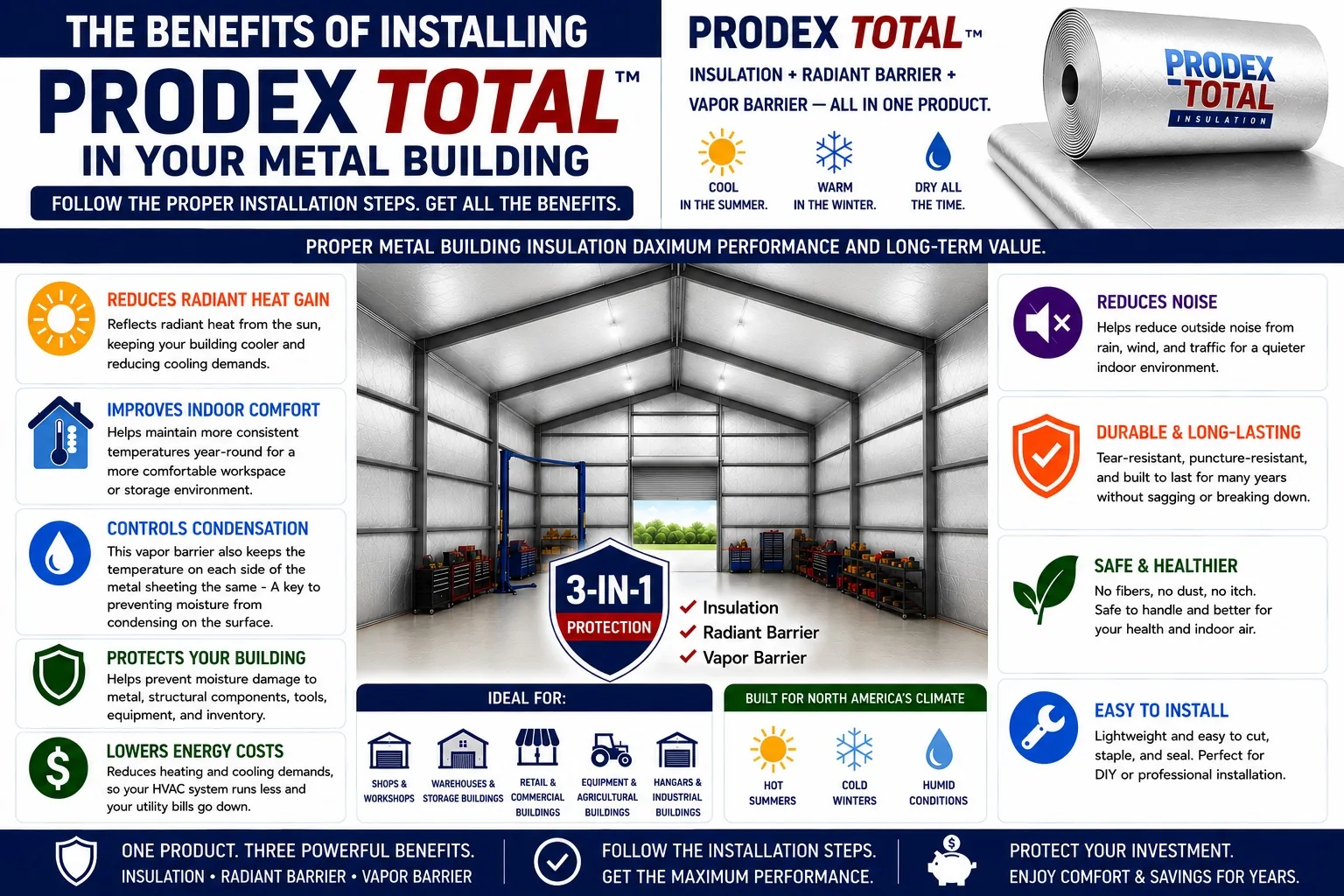
Insulating a metal building isn’t just about keeping heat in or out — it’s about stopping condensation, radiant heat, and air leaks that can damage your structure and lower energy efficiency.


Whether you’re working on a steel workshop, garage, barn, or storage building, the right installation method will prevent dripping condensation, improve comfort year-round, and protect your investment for the long term.

In this guide, you’ll learn:


  • The best insulation materials for metal and steel buildings

  • Step-by-step installation methods for new builds and retrofits

  • How Prodex Total outperforms traditional fiberglass, spray foam, and bubble wraps


Why Insulating a Metal Building Is Different


Metal buildings face unique insulation challenges because steel conducts heat quickly. That means:

  • In summer, uninsulated panels pull in solar heat, making interiors unbearably hot.

  • In winter, those same panels cool rapidly, causing condensation (“sweating”) that leads to rust, corrosion, or even mold.

The goal of insulation for metal structures isn’t just to add R-value — it’s to control moisture, reflect radiant heat, and seal air leaks.


The Best Insulation for Metal Buildings


The most reliable solution for insulating a metal building is Prodex Total 10M, a foil-faced reflective insulation that combines a radiant barrier, vapor barrier, and thermal break in one durable product.

Recommended Options


  • Prodex Total 10M — Heavy-duty design with heat-weldable seams for a complete vapor seal.
  • Prodex Total 5M Series — Available in 16", 24", 48”, 62”, 72”, and Fast Action rolls. Excellent for most DIY or contractor installations.
  • Other Reflective Options — Reflective Bubble Reflective and Foil-Fiberglass-Vinyl systems can also be used, though they offer lower performance.

Each of these provides condensation control, radiant heat reflection, and easy installation, but Prodex Total consistently delivers the best combination of performance and value.


Tools and Materials You’ll Need


Before beginning your installation, gather the proper tools and materials:


  • Reflective Tape – Seals seams, prevents air leaks, and maintains a vapor barrier. Not required for 10M and Fast Actions rolls.
  • Double-Sided Tape – Holds insulation in place during installation.
  • Utility Knife – For clean, accurate cuts.
  • Super Metal Sealant – Used to attach the metal pins to a metal surface. (retrofits).
  • Pins and Caps – Secure insulation to surfaces without drilling. (retrofits)
  • Screw Gun and Screws – For fastening insulation to tubular framing.
  • Heat Gun (for 10M) – Use to heat-weld seams; start at lowest setting and turn up until you notice the foam edge of the insulation roll becomes gooey.
Tip: Always tape or seal seams and edges. A continuous vapor barrier is key to stopping condensation and improving insulation performance. 10M and Fast Action rolls don't require seam tape.

Step-by-Step: How to Insulate a Metal Building


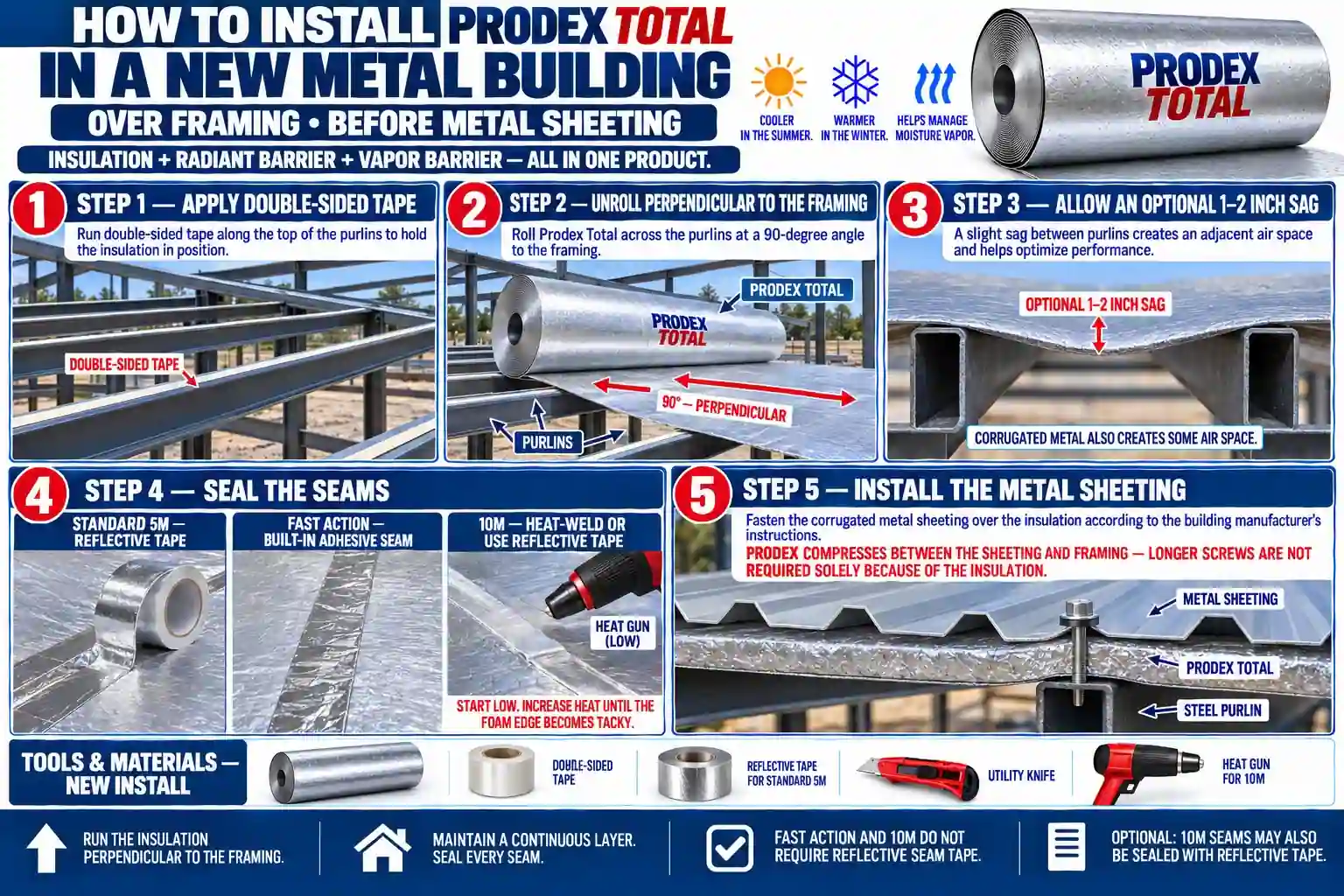
New Install — Over Framing


  1. Apply double-sided tape along the top of the purlins to keep insulation from moving during installation.

  2. Unroll insulation over the framing. Run the insulation perpendicular to the framing.

  3. Tension correctly — allow a slight 1–2-inch sag to create an air gap to optimize performance (optional but beneficial).The metal sheeting is corrugated so you'll have some air-gap even if you pull the insulation tight.

  4. Seal seams with reflective tape, or heat-weld seams if using Prodex Total 10M. You have the option of sealing the 10M roll with reflective tape. Fast Action rolls don't require seam tape.

  5. Install the metal sheeting over the insulation layer.

This method provides a continuous thermal and vapor barrier while maintaining an air space to optimize performance.

Steel

Existing Structure — Retrofitting


If your building is already sheeted, you can still insulate it effectively by following one of these approaches.


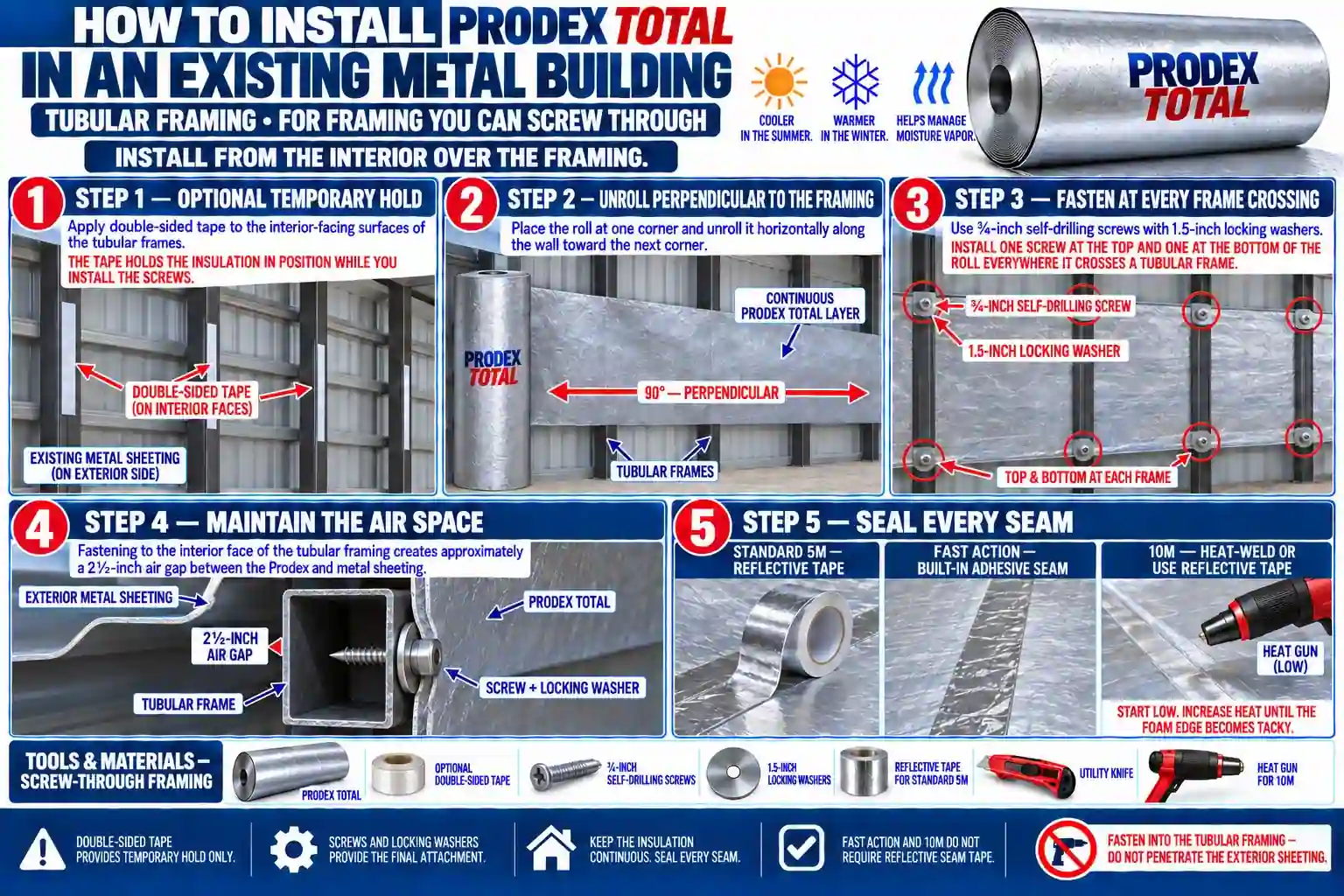
Tubular Framing


  1. Optional - Place double sided tape on the tubular frames for a temporary hold of the insulation. This will keep the insulation in place and make it easier for you to attach the insulation with screws. 

  2. Run insulation perpendicular to the frame members. For example - Place roll on floor in the corning of the building. Unroll the insulation allong the wall until you reach the next corner. 

  3. Attach using ¾-inch self-drilling screws and 1.5-inch locking washers. Every place the insulation passes a tubular frame, attach the roll with a screw at the top and bottom of the roll to the tubular frame. That will provide you a 2-1/2 inch air-gap between the insulation and the sheeting. Repeat this process until the building is completed. 

  4. Seal all seams with reflective tape (10M and Fast Action can be heat-welded).


I-Beams, Z, or C Purlins


When drilling through your framing isn’t possible, choose one of these methods:


  1. Pins and Caps – See how to install insulation using pins and caps.

  2. Wood Furring – Build out the inside of the wall to create a straight fastening surface. For comprehensive guide: How to insulate a pole barn

  3. Tape and Sealant Combo – Apply double-sided tape next to a bead of Super Metal Sealant under framing; the tape holds short-term, the sealant bonds long-term. This is the least effective of the install methods. 

Maintain at least a ¾-inch air gap and ensure all seams are fully sealed for the best condensation control and thermal performance.

Steel 2 Steel 3


B. Attaching using straps (see video below)


Why Choose Prodex Total for Steel and Metal Buildings


Traditional fiberglass insulation will absorb moisture and lose effectiveness over time. Spray foam won't stop the radiant heat. Bubble wrap, is merely a single or double row of air bubbles; consequently, it also loses effectiveness in time. Prodex Total eliminates those issues by combining multiple protective layers:


  • Reflective Radiant Barrier – Blocks up to 97% of radiant heat.

  • Vapor Barrier – Prevents condensation and corrosion.

  • Closed-Cell Core – Resists mold, mildew, and pests. Seals around nails, screws and staples.

It’s an all-in-one insulation system specifically engineered for metal and steel buildings — garages, barns, workshops, and commercial spaces alike.


Learn More About Metal Building Insulation

For deeper information and side-by-side comparisons, visit:


Need help choosing a product?
circle

We use cookies

We use necessary cookies to make our site work and optional cookies to improve your experience. See our Privacy Policy.