Shipping Container Insulation in Illinois: Stop Heat, Cold & Condensation
Shipping containers are strong, durable and increasingly useful as storage buildings, workshops, offices and converted living spaces. But the same steel construction that makes a container durable also creates a significant insulation challenge.
Illinois weather makes that challenge particularly noticeable.
During summer, direct sunlight can heat the steel roof and walls and radiate that heat toward the interior. During winter, the thin steel shell rapidly transfers heat toward the cold exterior. As temperatures change, condensation can form on the inside of the steel.
The result can be an interior that is hot in summer, cold in winter and vulnerable to moisture throughout the year.
For a comprehensive discussion covering container insulation nationally, see our Shipping Container Insulation Guide. The national guide explains why steel containers require an insulation system that addresses heat transfer, radiant heat, air movement, vapor movement and condensation—not simply R-value.
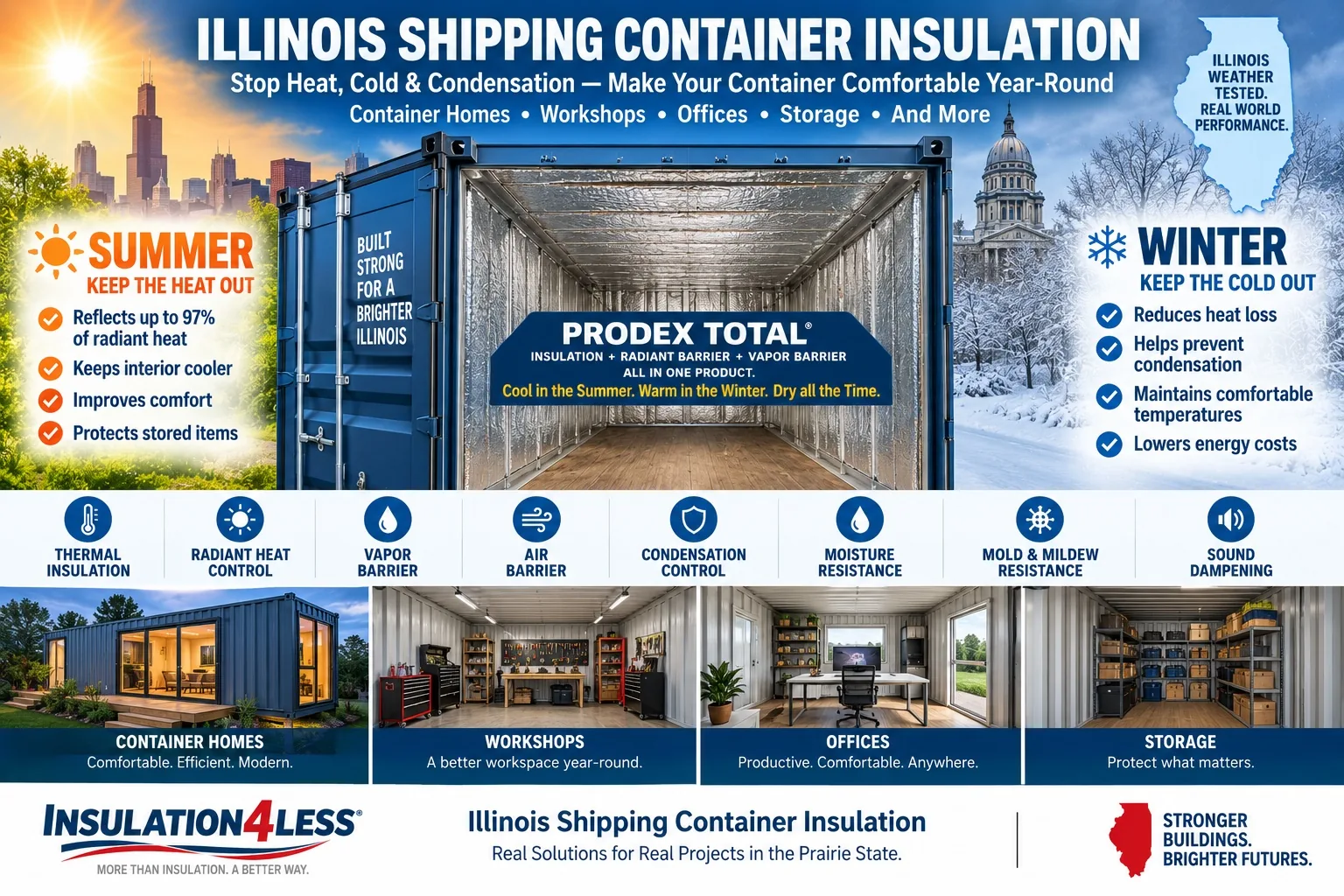
Prodex Total = Insulation + Radiant Barrier + Vapor Barrier — All in One Product.
Cool in the Summer. Warm in the Winter. Dry all the Time.
Why Shipping Containers Are Difficult to Insulate in Illinois
A shipping container is essentially a large steel box. Unlike conventional construction, there is very little material between the interior and exterior to slow changes in temperature.
This creates several challenges:
- Rapid heat gain from summer sunlight
- Heat loss during cold Illinois winters
- Cold interior steel surfaces
- Condensation
- Moisture accumulation
- Limited wall and ceiling space for insulation
- Thermal bridging through steel components
These issues become particularly important when the container is heated, air-conditioned or occupied. A container used only for basic storage may have different insulation requirements than a workshop occupied every day or a container being converted into conditioned living space.
For a broader overview of insulation considerations throughout the state, see our Illinois Insulation Guide.
Summer Heat Inside an Illinois Shipping Container
A shipping container sitting in direct summer sunlight can absorb substantial solar energy through its steel roof and walls. The steel becomes hot and transfers energy toward the cooler interior. Part of this transfer is radiant heat, which is why simply filling a cavity with conventional insulation does not address every form of heat transfer.
Reflective insulation can reduce radiant heat transfer when its reflective surface faces an appropriate air space.
Prodex Total reflects up to 97% of radiant heat, helping reduce the radiant energy moving from hot steel toward the container interior when installed correctly. For a storage container, this can help protect temperature-sensitive contents. For a workshop, office or container home, it can help create a more comfortable environment and reduce the cooling load.
Winter Heat Loss in Illinois Shipping Containers
Illinois winters create the opposite problem. Steel offers very little resistance to heat flow. If the container is heated, interior heat can rapidly move through the steel shell toward the colder outdoors. The walls, roof and steel framing can also become extremely cold.
That means insulation has two important winter jobs:
Reduce unwanted heat transfer and help prevent warm, moisture-containing interior air from reaching cold steel surfaces.
The second function is especially important because it relates directly to condensation.
Why Shipping Containers Sweat
People often describe the moisture inside a shipping container as the container “sweating.” The container isn't producing water. Condensation occurs when moisture-containing air reaches a surface cold enough for water vapor to condense. In an Illinois winter, the steel roof and walls can become very cold. If warmer, humid interior air reaches that steel, water can form on the surface. The moisture may appear as droplets on the ceiling and walls or eventually drip onto stored materials, equipment or interior finishes.
This is why shipping container condensation cannot be addressed by R-value alone. The insulation assembly also needs to control air and vapor movement.
For additional information about the mechanisms involved, see our national Shipping Container Insulation Guide.
Why Prodex Total Works Well in Shipping Containers
Prodex Total Insulation is particularly suited to steel containers because it combines several building-envelope functions in a relatively thin product. Prodex Total consists of reinforced reflective foil surfaces surrounding a closed-cell polyethylene foam center.
Depending on the product and installation, it provides:
- Thermal insulation
- Radiant heat control
- Vapor barrier
- Air barrier
- Condensation control
- Moisture resistance
- Mold and mildew resistance
- Sound dampening
Its closed-cell polyethylene foam does not absorb water, while the reflective surfaces help control radiant heat. The vapor-barrier function is particularly important when trying to keep warm, moisture-containing interior air from reaching cold steel. For an Illinois container, this combination addresses the three primary concerns simultaneously:
Heat + Cold + Condensation
Preserve Valuable Interior Space
Interior space is unusually valuable in a shipping container. Unlike a large warehouse or pole barn, adding a thick insulation and framing assembly to every wall can noticeably reduce the usable width and height of the container. That makes insulation thickness an important part of the decision.
Prodex Total provides multiple insulation functions in a relatively thin assembly. 10M Prodex Total Plus is approximately 10 mm (0.4 inch) thick, while still providing insulation, radiant-barrier and vapor-barrier functions. This can be particularly advantageous in shipping-container conversions where every inch of interior space matters.
What Is the Best Insulation for a Shipping Container in Illinois?
Several insulation types can be used in shipping containers. The best choice depends on how the container will be used, whether it will be conditioned and how the complete wall and ceiling assembly will manage moisture.
Prodex Total Reflective Insulation
Prodex Total addresses several container-specific problems with one material. The closed-cell foam provides thermal insulation. The reflective surfaces control radiant heat when installed adjacent to an appropriate air space. The product also provides air- and vapor-barrier functions that are important for condensation control. For many Illinois shipping containers, particularly workshops, storage containers and metal-building-style conversions, this combination makes Prodex Total an excellent choice.
Spray Foam
Spray polyurethane foam is frequently considered for shipping containers because it can conform directly to the corrugated steel surface and provide air sealing. However, spray foam generally requires specialized application and can be considerably more expensive as an installed system. Once applied directly to the steel, it is also substantially more difficult to remove than a roll insulation system. The appropriate choice depends on budget, container use, desired thermal performance and the design of the finished interior.
For a more detailed look at spray foam's advantages, disadvantages, costs and alternatives in steel structures, see our Spray Foam Insulation for Metal Buildings & Pole Barns guide.
Rigid Foam Board
Rigid foam panels can provide substantial thermal resistance in a relatively compact assembly. The challenge in a shipping container is fitting rigid panels around corrugated walls, framing, doors and other irregular surfaces. Gaps and seams need to be carefully addressed. Foam board also does not inherently provide the same reflective radiant-heat function as a properly installed reflective insulation system. For more information about rigid insulation materials, see our Foam Board Insulation Guide.
Fiberglass
Fiberglass can provide additional thermal resistance when installed within framed cavities. However, condensation management is particularly important because the insulation system must prevent moisture from accumulating against the steel or within the wall assembly. Fiberglass may be used with Prodex Total in an appropriately designed system when greater overall thermal resistance is required.
Shipping Container Roof Insulation in Illinois
The roof deserves special attention because it receives substantial solar exposure during summer and can become an extremely cold condensation surface during winter. A bare steel container roof can radiate heat toward the interior after hours of sunlight. During cold weather, warm interior air rising toward the ceiling can create a significant condensation risk when it reaches cold steel. Prodex Total can help address both problems by combining thermal insulation with radiant and vapor control. For additional information about roof assemblies and insulation types, see our national Roof Insulation Guide.
Shipping Container Wall Insulation
Container walls experience many of the same problems as the roof. Sun-exposed walls can become hot during summer, while winter temperatures can make the steel extremely cold. The corrugated steel surface also makes some conventional insulation materials more difficult to install. Prodex Total's flexibility makes it suitable for following or spanning container framing configurations while providing a continuous insulation layer. The objective is to create an insulation system that minimizes gaps and prevents moisture-containing interior air from freely reaching cold exterior steel.
How to Insulate a Shipping Container
Insulating an existing shipping container differs from insulating many conventional buildings because you generally do not want to simply drive screws through the exterior steel shell. Insulation4Less has a dedicated installation guide specifically for cargo containers and metal buildings where you cannot screw through the framing.
See How to Insulate a Shipping Container for the complete installation instructions. The installation method uses components such as insulation pins with caps, reflective tape and Super Metal Sealant. If the container is being framed internally with wood, other installation approaches may also be appropriate.
Do not drill or screw through the exterior container skin simply to hold the insulation in place. The installation method should preserve the weather-resistant exterior shell while securely supporting the insulation from inside.
Does Reflective Insulation Need an Air Space?
Yes. An adjacent air space is important for radiant-barrier performance. The reflective surface works by reducing radiant heat transfer across an air space. Without an adjacent air space, the reflective component cannot provide the same radiant-barrier benefit.
The exact assembly depends on the container framing and installation method, so review How to Insulate a Shipping Container before beginning the installation.
Best Prodex Total for an Illinois Shipping Container
For many container applications, our primary recommendation is 10M Prodex Total Plus.
10M Plus is:
10 mm (0.4 inch) thick
4 ft × 85.3 ft
341 sq. ft. per roll
It has reflective reinforced foil on both sides of a closed-cell polyethylene foam center. The 10M product also has a heat-seal edge that allows adjoining rolls to be welded together, creating a tight mechanical and impermeable seam without conventional seam tape. This is particularly useful in a container because maintaining a continuous air and vapor-control layer is important for condensation prevention.
5M Prodex Total Options
A variety of 5M Prodex Total sizes can also work well in shipping containers. For example, 48 Inch Prodex Total 5M Plus is 5 mm (0.2 inch) thick, 700 square feet per roll. The 72 Inch Prodex Total 5M Plus is 6 feet wide and covers 600 square feet per roll, which can be useful where wider material reduces the number of seams. Other widths are available depending on the container configuration and installation method. The dedicated shipping-container installation guide identifies 10M as the most popular option and lists multiple 5M choices for container installations.
Shipping Container Homes in Illinois
A shipping container converted into living space requires more careful planning than a container used for basic storage. Once people occupy, heat, cool, cook or shower inside the structure, both temperature control and interior moisture become more important.
The complete assembly may need to address:
- Thermal requirements
- Air sealing
- Vapor control
- Ventilation
- Windows and doors
- Electrical penetrations
- Plumbing penetrations
- Fire and interior-finish requirements
- Local building and energy codes
Insulation should therefore be selected as one part of the complete container-home design. Our national House Insulation Guide provides additional information about insulation considerations for conditioned living spaces. The guide specifically notes that steel container homes are vulnerable to summer heat, winter cold and condensation.
Illinois Container Workshops and Offices
A container converted into a workshop or office may be occupied for hours at a time. In summer, reducing radiant heat from the steel roof and walls can make the space considerably easier to cool. In winter, insulation helps retain heat, while vapor and air control become important for reducing condensation against cold steel. These applications are similar in several respects to insulating other steel workspaces. See our Illinois Metal Garage Insulation Guide for additional information about insulating conditioned garages and workshops.
Illinois Storage Container Insulation
Even when people do not occupy the container, insulation can still be valuable. Stored tools, equipment, furniture, documents and other materials may be affected by extreme temperatures or moisture. Insulating the container can help moderate temperature swings and reduce the conditions that contribute to condensation. However, insulation should not be used to hide an existing water leak or unresolved moisture source. Inspect the roof, walls, doors and seals before covering the interior steel.
How Much Shipping Container Insulation Do I Need?
Do not calculate the insulation requirement using floor square footage alone.
You may be insulating:
- Ceiling/roof
- Two long walls
- Two end walls
- Doors
- Floor, depending on the project
A 40-foot container therefore requires substantially more insulation than its 320-square-foot floor area would suggest. Measure the actual surfaces being insulated and allow for the installation configuration and necessary overlaps. For estimating assistance, use the Advanced Insulation Calculator.
Before Choosing Container Insulation, Ask These Questions
What Will the Container Be Used For?
Storage, workshops, offices and living spaces can have very different requirements.
Will the Container Be Heated?
Heating increases the winter temperature difference between the interior and exterior and makes condensation control more important.
Will It Be Air-Conditioned?
Cooling changes heat and moisture movement during humid summer conditions.
Is Condensation Already Occurring?
Determine whether the moisture is condensation, rainwater leakage or another source before covering the steel.
How Much Interior Space Can You Sacrifice?
Thick wall assemblies can noticeably reduce the usable dimensions of a shipping container.
How Will Air and Vapor Be Controlled?
The insulation system should be considered as a complete assembly rather than simply placing insulation against steel.
Can You Maintain the Necessary Air Space?
Reflective insulation needs the appropriate adjacent air space to provide radiant-barrier performance.
What Do Local Codes Require?
A converted shipping container may be subject to building, structural, energy, fire and occupancy requirements depending on its use and location. Verify requirements with the appropriate Illinois local authority before beginning a regulated conversion.
Frequently Asked Questions About Illinois Shipping Container Insulation
What is the best insulation for a shipping container in Illinois?
The best system depends on the container's use. Prodex Total is particularly well suited to shipping containers because it combines thermal insulation, radiant heat control, vapor-barrier and air-barrier functions in a relatively thin product. This helps address summer heat, winter cold and condensation while preserving interior space.
Why does my shipping container get so hot in summer?
Steel readily absorbs and transfers solar energy. A container roof and sun-exposed walls can become very hot, creating both conductive and radiant heat transfer toward the interior. Properly installed reflective insulation can help reduce the radiant component.
Why is there water on the inside of my shipping container?
If the container isn't leaking, the water may be condensation. Warm, moisture-containing air can condense when it reaches sufficiently cold steel. This is particularly important during an Illinois winter.
Will Prodex Total help stop shipping container condensation?
Prodex Total is designed to help prevent condensation when installed as part of the proper assembly. Its closed-cell foam, vapor-barrier and air-barrier functions help isolate interior air from cold steel surfaces. Installation details and sealed seams are important.
Should I screw Prodex Total directly through the shipping container walls?
No. For existing shipping containers, use an installation method that doesn't require penetrating the exterior steel skin. See How to Insulate a Shipping Container for the recommended methods.
What Prodex Total product is best for a shipping container?
10M Prodex Total Plus is the most popular product identified in our container installation guide. It is 10 mm thick, rated R-22 and includes a heat-seal edge for creating sealed seams.
Can I use fiberglass with Prodex Total in a shipping container?
Yes, in an appropriately designed assembly. Fiberglass can add conductive thermal resistance while Prodex provides radiant, air and vapor-control functions. Moisture management is especially important because the exterior shell is steel.
Can I use Prodex Total in a shipping container home?
Yes, but an occupied container conversion should be treated as a complete building system. Verify insulation, ventilation, fire, structural and applicable building-code requirements for the particular project.
How do I calculate how much insulation I need?
Measure the actual roof/ceiling and wall surfaces you plan to insulate rather than relying on the container's floor area. Use the Advanced Insulation Calculator for additional estimating assistance.
Related Illinois Insulation Guides
Illinois Insulation Guide — Start with the statewide guide covering Illinois climate, building types and insulation options.
Illinois Metal Building Insulation — Learn how to control heat, cold and condensation in Illinois steel buildings.
Illinois Pole Barn Insulation — Insulation strategies for Illinois agricultural and post-frame buildings.
Illinois Metal Garage Insulation — Improve year-round comfort and condensation control in Illinois garages and workshops.
Illinois Roof Insulation — Compare roof and ceiling insulation for Illinois homes and metal buildings.
Illinois Quonset Hut Insulation
Illinois Under-Slab Insulation
Fiberglass vs. Prodex Total for Illinois Buildings
Insulate the Steel — Protect the Interior
A shipping container was designed to transport cargo, not to provide a comfortable conditioned interior. Illinois weather exposes that steel shell to summer sun, winter cold and major seasonal temperature swings. The right insulation system can transform the space. Prodex Total helps address the problems that matter most inside a steel container:
Heat + Cold + Condensation + Moisture
For complete national information, continue to our Shipping Container Insulation Guide. For the actual installation process, follow How to Insulate a Shipping Container.
Prodex Total = Insulation + Radiant Barrier + Vapor Barrier — All in One Product.
Cool in the Summer. Warm in the Winter. Dry all the Time.
One Solution to Heat, Cold and Condensation – Prodex Total.